
Electronics and Gadget Facebook Ads in Malaysia
What a Malaysian phone shop, repair counter, trade-in buyer or gadget brand needs to get right before a Facebook or Instagram ad goes live: certification, price claims, second-hand wording and instalment advertising.
Updated August 2026 · Likit Sae Lee, CTO
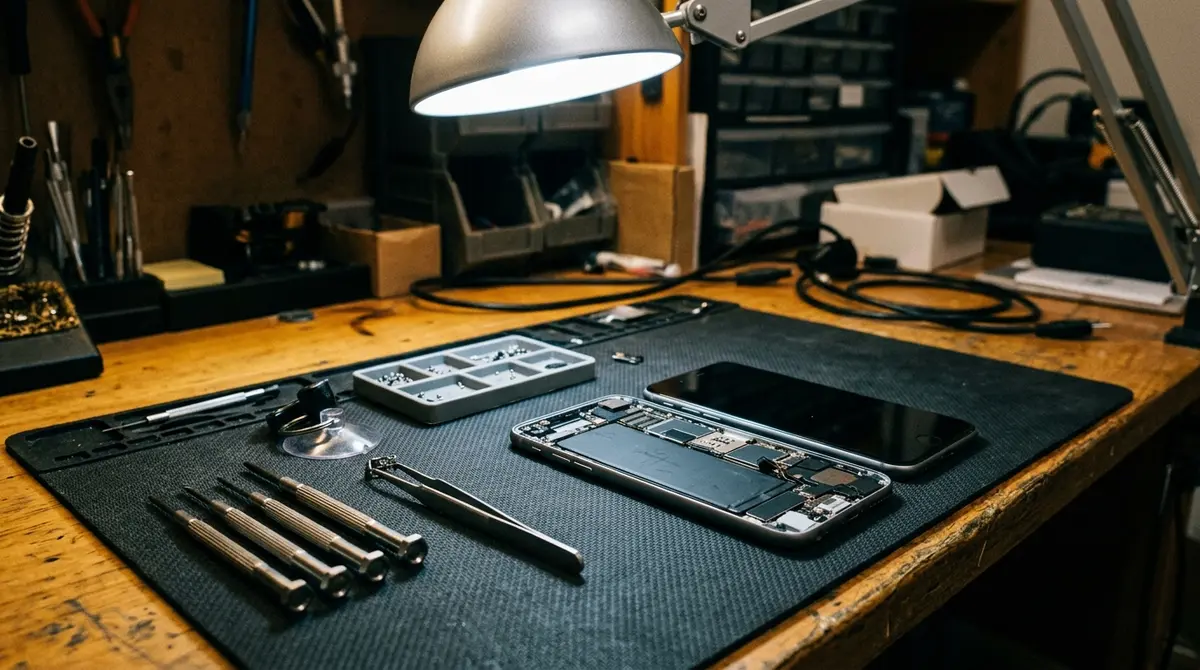
Electronics ads in Malaysia answer to two rulebooks at once. Product law comes first: the Electricity Regulations 1994 name advertising in the same breath as selling for regulated electrical equipment, and MCMC's July 2025 e-commerce guidelines, which are administrative guidance rather than law, sequence certification ahead of advertising a communications equipment listing. Advertising law comes second: section 18 of the Trade Descriptions Act 2011 makes any false or misleading statement in an advertisement an offence with the burden of proof on the advertiser, and the Consumer Credit Act 2025 adds a misleading credit advertising offence carrying up to RM5 million. Get those settled, then worry about the hook.
You sell phones, fix screens, buy back old MacBooks or ship gadget accessories, and the ad you want to run quotes a price, a monthly instalment or the word genuine. Every one of those is a regulated statement in Malaysia, and the rules sit across several separate instruments plus Meta's own standards. Here is what applies, what does not, and where the honest answer is that nobody has published one.
The short version
Most categories have one rulebook. Electronics has three, and they stack in a specific order.
The first is product law, and it applies before the ad exists. Regulated electrical equipment needs Energy Commission approval, and regulation 97(1) of the Electricity Regulations 1994 names advertising alongside manufacturing, importing, displaying and selling in the same prohibition. Communications equipment needs certification, and Regulation 16(1) of the Communications and Multimedia (Technical Standards) Regulations 2000 bars offering it for sale without it, with MCMC putting the penalty at up to RM300,000. Neither of those is about your creative. They are about whether you were allowed to offer the thing at all.
The second is advertising law, and it applies to every word in the frame. Section 18 of the Trade Descriptions Act 2011 makes any false or misleading statement in an advertisement an offence, and section 18(2) puts the burden of proving otherwise on you. Since 1 March 2026, per commencement notification P.U.(B) 74/2026, the Consumer Credit Act 2025 adds a misleading credit advertising offence with a RM5 million ceiling that reaches any person, not just licensed lenders. If your ad says ansuran, that section is now your problem.
The third is Meta's own standards, which decide whether the ad runs at all.
And one thing that does not exist: a dated, primary Malaysian cost benchmark for this category. No dated, primary Malaysian CPM, CPC, CPA or ROAS figure for electronics or gadget retail could be found for this guide, and the RM numbers that circulate on local blogs carry no source you can check.
Who is actually advertising electronics in Malaysia
The name recognition in this category belongs to the chains, and the ad volume does not.
Counting the 32 example ads in this archive category, exactly half of them, 16, come from single-location repair counters, trade-in buyers and instalment sellers rather than national retail chains. That is a statement about the composition of what is advertised, not about performance: the Meta Ad Library publishes no spend, impression or conversion data for ordinary commercial ads, so nothing in an archive of creatives can tell you which of these advertisers is winning. The Meta Ad Library research guide covers why that limitation exists and how to work inside it.
There is no dominant cluster. Trade-in and buy-back shops contribute six ads, neighbourhood repair counters contribute six, and accessory brands contribute six. That is a three-way tie, and repair fields the most distinct advertisers of the three, six separate shops for six ads. Home tech adds five, instalment sellers four, and the chains and other multi-location retailers five between them.
Look at how these advertisers name themselves and the geography does the talking. Jc Gadget World Wholesale & Retail Bukit Sentosa. Pro Mobile Kipmart Tampoi. Gila Gadgets Shah Alam Seksyen 18. MRFIX Cheras. Rakuya Mobile Fix Pasir Gudang. One page is literally called Ansuran.mudah.avtmarket, which puts the offer in the brand. Another, JM 大量回收二手 电脑&电话, puts bulk buy-back of used computers and phones in the page name itself. There is a language signal in those names: Chinese-script page names cluster in trade-in, a Malay page name carries the ansuran pitch, English names carry accessories and the global brands. But the archive records page names and English summaries of the hook, not the language of the ad copy, and the Malay signal rests on a single page name. Treat it as a directional read, not a measured split.
Roughly one ad in five puts a ringgit figure against a named SKU. RM67 a month for a HONOR 600 5G. RM99 for a screen or battery. RM67.9 for a power bank. RM569 down from RM699 for an air purifier. A smart lock from RM699. Those prices concentrate in instalment, repair and home-tech discounting, and the accessory cluster runs no price at all. One in five is a minority, and it is more than enough to put this category inside Malaysia's price-comparison, credit-terms, genuine-parts and second-hand rules.
Certification comes before creative
Two regulators sit upstream of your ad account, and neither of them cares what your hook says.
Suruhanjaya Tenaga, for electrical equipment. As published, regulation 97(1) of the Electricity Regulations 1994 provides that subject to regulations 97C, 97D, 97E and 101A, no person may manufacture, import, display, sell or advertise domestic equipment, low voltage equipment usually sold directly to the general public, or low voltage equipment not requiring special skills to operate, unless the equipment is approved by the Commission. Regulation 97(2) makes the Certificate of Approval to manufacture, import, display, sell or advertise a distinct form. Advertising is named in the prohibition itself, which is unusual and easy to miss. The Commission's 2018 approval guideline lists Adapter or Charger as category 33 of regulated equipment, with an express bullet for charging a mobile phone battery, and states that sellers and advertisers of electrical equipment are required to apply for the Certificate of Approval. Regulation 122 sets the general penalty at a fine not exceeding RM5,000 or up to one year, or both, unless the conduct is otherwise made an offence under the Act.
One honest gap: the Commission's own material describes the certificate as issued to importers and manufacturers, and regulation 97C(1) puts the registration duty on a person who manufactures or imports, while the 2018 guideline reaches sellers and advertisers. Whether a reseller advertising an already-approved product relies on the importer's certificate or needs its own is not resolved by the published documents. Ask the Commission before you build a campaign on an assumption.
MCMC, for communications equipment. Regulation 16(1) of the Technical Standards Regulations 2000 provides that no person shall use, offer for sale, sell or have in his possession with a view to sell any communications equipment which is contrary to the standards, which is not certified as required, which has been certified but subsequently altered so it no longer complies, or which does not bear a certification mark or label. Read that list again: it does not say advertise. It turns on offering for sale, which a shopping ad usually is, but the distinction matters if anyone tells you the regulation bans advertising in terms. The scope is wider than most shops expect. MCMC's Annex 1 covers mobile phones, telephone sets, fax machines and walkie-talkies as customer equipment, and personal computers including laptops, notebooks, tablets and desktops, their accessories such as wireless keyboards, wireless mice and USB dongles, smart and digital televisions, wireless chargers and wireless power transfer devices as radiocommunications equipment. That is essentially the whole shelf.
MCMC's July 2025 e-commerce guidelines do put certification before advertising in sequence. The Annex 2 process flow runs request to advertise, apply for certification, advertise product on the local merchant lane, and review request, product certified, allow to advertise on the platform lane. Para 7.2.2 requires evidence of certification status in the product description: the MCMC Label, or a copy of the SIRIM Certificate of Conformity. Two guard rails on that. First, the document's own notice says it is a guide only and administrative in nature and should not be relied on as legal advice. Second, para 7.2 opens by addressing a local merchant as importer, and 7.2.2 speaks to the product description section on an online shopping platform. It is not a rule that your Facebook or Instagram creative must display an MCMC label, and nobody should tell you it is. Whether the same expectation reaches a paid ad clicking through to WhatsApp instead of a marketplace listing is genuinely unsettled by the published text.
The equipment you do not advertise at all
Annex 3 of the same MCMC guidelines lists communications equipment that is not meant for public use. Item 1 covers jammers, mobile jammers, portable mobile jammers and Wi-Fi crackers. Item 3 covers SIM blasters and SIM multiplexers. Item 4 is the long one, and it is the one a gadget seller trips over: cellular booster, phone booster, 4G amplifier, mobile phone repeater, mobile phone amplifier, cellular repeater, 4G repeater, network amplifier, mobile booster. Para 6.4.3(1) asks platforms to block their sale, and Annex 3 states the list is non-exhaustive, so renaming the product does not move it outside the category.
Boosters sell well, which is exactly why they keep appearing in gadget catalogues. Leave them out of the ad account.
Price claims: which section actually bites
The instinct is to reach for section 14 of the Trade Descriptions Act 2011 when a price is involved. Section 14 is narrower than its reputation. Its three limbs cover an indication of a recommended price, an indication that goods are being offered at a price less than that at which they are in fact being offered, and an indication of a price less than that offered by another person. There is no previous-price limb. A struck-through former price reaches section 14 only through section 14(3)(b), which treats anything likely to be taken as an indication of a recommended price as such an indication.
The provision that actually carries a misleading price card is section 18(1): no person shall make any false or misleading statement in any advertisement in relation to any goods or services. Section 18(2) reverses the burden and puts the onus of proving otherwise on the person charged. Section 19 deems both the person offering to supply and the person on whose behalf the advertisement is made to have given the statement unless the contrary is proved, which is how an agency-made ad lands back on the shop. Section 21(a) puts a body corporate's ceiling at RM500,000, rising to RM1 million on a second or subsequent offence.
Where section 14 does apply, the presumptions are unhelpful to a careless advertiser. Section 14(2) also puts the onus on the person charged, and section 14(3)(a) treats a recommended price, unless the contrary is expressed, as one recommended by the manufacturer and recommended generally for retail supply in the area where the goods are offered. A price the item carried once, briefly, in a different state is not going to discharge that. Section 14(3)(c) adds that any person advertising goods as available for supply is taken as offering to supply them, which closes the "it was only an ad" argument.
Two more provisions belong on the same checklist. Section 15(1) of the same Act provides that where an advertisement quotes a price, that price is deemed to include all eligible government taxes and duties and any other charges unless the contrary appears; section 15(2) excepts advertisements made in the course of a prescribed trade or business under section 10B of the Price Control and Anti-Profiteering Act 2011, so the deeming rule is not universal, but for an ordinary retailer the working assumption is that the number on the creative is the number the customer pays. And section 13(1) of the Consumer Protection Act 1999 handles bait advertising: no person shall advertise for supply at a specified price goods or services which that person does not intend to offer for supply, or does not have reasonable grounds for believing can be supplied. Section 25(1) sets the penalty for contraventions of Parts II and III at up to RM250,000 for a body corporate, rising to RM500,000 on a repeat, and section 25(2) adds up to RM1,000 for each day a continuing offence persists after conviction.
| The claim on the creative | The provision that bites | What discharges it |
|---|---|---|
| "Was RM699, now RM569" | TDA 2011 s.18(1), with s.18(2) burden on you | Records showing you actually offered it at RM699 |
| "Lowest price in Malaysia" | TDA 2011 s.14(1)(c), comparison to another seller | Dated evidence of the other seller's price |
| "RM99 screen repair" with conditions off-frame | TDA 2011 s.18(1); CPA 1999 s.13(1) if you cannot supply at it | Conditions visible in the creative, stock or capacity to deliver |
| A quoted price that excludes tax or a fee | TDA 2011 s.15(1), subject to the s.15(2) exception | State the exclusion on the face of the ad |
| A trade-in figure you will not honour on inspection | TDA 2011 s.18(1); CPA 1999 s.10(1) | Publish it as an up-to figure with the grading basis |
Second-hand, refurbished, and the word "genuine"
Repair counters and trade-in shops sell trust, and trust words are regulated words.
Section 10(1) of the Consumer Protection Act 1999 makes it an offence to make a false or misleading representation that goods have had a particular history or particular previous use, that they are new or reconditioned, or that they were manufactured, produced, processed or reconditioned at a particular time. The Trade Descriptions Act 2011 catches the same claims as trade descriptions: section 6(1)(c) covers the method of manufacture, production, processing or reconditioning, section 6(1)(k) covers approval by any person or conformity with a type approved by any person, and section 6(1)(n) covers other history including previous ownership or use. Section 7(1) defines a false trade description as one false to a material degree, and section 6(5) confirms that a description published by electronic means counts when it forms part of an advertisement. A Meta ad is exactly that.
So "genuine parts", "original unit", "like new", "refurbished by us" and "one owner" are all trade descriptions. The discipline the site's halal creative guide applies to a regulated word transfers here without modification: a word a statute defines is not a marketing adjective you get to stretch.
One advertiser in the archive leans into that rather than around it. Rakuya Mobile Fix Pasir Gudang runs a video walking the customer through checking that Parts and Service reads Genuine after the repair. That is a claim built to be verified by the person who received it, which is the safest form a trust claim can take. MRFIX Cheras takes the softer route, a founder-led static about the trusted technician who fixes your phone and laptop, making a claim about the person rather than the part.
On the guarantee side, section 32 of the Consumer Protection Act 1999 requires goods to be of acceptable quality, judged with regard to the nature of the goods, the price, statements on packaging or labels, and representations made by the supplier or manufacturer. Section 32(4) is the practically useful one for a second-hand shop: where goods are displayed for sale, the defects treated as drawn to the consumer's attention are those disclosed on a written notice displayed with the goods. Section 37 implies a guarantee that repair facilities and spare parts will be reasonably available for a reasonable period unless the consumer was told otherwise before supply. Section 6 prohibits contracting out, and section 6(2) makes purporting to contract out an offence in itself. No amount of "sold as is, no returns" in an ad caption changes that.
Neither Act was found to prescribe a mandatory form of words or an on-ad disclosure for used goods, so there is no official template. Write the condition plainly anyway, in the creative rather than only in the comments.
Ansuran, and the RM5 million line
Four of the 32 example ads sell on instalment, and the framing is consistent: quote the month, not the machine. Urban Republic runs a carousel offering the HONOR 600 5G from RM67 a month with free gifts. Mobile Corner runs video on buying a premium tablet on easy instalment with no credit card. Jc Gadget World Wholesale & Retail Bukit Sentosa runs a dynamic ad on buying a phone with two documents. Ansuran.mudah.avtmarket and avt.market.official put the plan in the page name and the customer in the video.
Here is the legal shape underneath. The First Schedule to the Hire-Purchase Act 1967, headed List of Goods, reads at item 1: "All consumer goods", and section 2 defines consumer goods as goods purchased for personal, family or household purposes. A smartphone, laptop or tablet bought for personal use is inside that. Section 2 also defines a hire-purchase agreement to include an agreement for the purchase of goods by instalments, but excludes any agreement whereby property in the goods passes at the time of the agreement or before delivery. So the determinant is title: if the shop keeps it until the final instalment, that is hire purchase; if the customer owns the device walking out of the store, it is not. The text read here is KPDN's updated reprint as at 1 May 2019, so confirm against the current text before you rely on it.
The site's automotive ads guide already covers the point that the Hire-Purchase Act regulates the agreement and the pre-contract disclosure rather than the advertisement, and a full-text search of Act 212 for "advertis" returns nothing. That still holds for a phone shop. What puts a phone shop in the frame at all is that first item in the First Schedule.
What has changed for electronics is the Consumer Credit Act 2025. Section 87(1) says no person shall engage in any prohibited business conduct as set out in Schedule 6, and the "no person" framing is wider than the neighbouring section 84, which binds only credit providers and credit service providers. Schedule 6 item 2 covers inducing or attempting to induce a credit consumer, including through an advertisement, to do or omit an act in relation to any credit product or service, by making a misleading, false or deceptive statement, illustration, promise, forecast or comparison, by dishonestly concealing, omitting or ambiguously providing material facts, or by recklessly making such a statement. Section 87(2) sets the penalty at a fine not exceeding RM5 million, or imprisonment not exceeding five years, or both, and Schedule 7 excludes section 87(1) from monetary penalties, making prosecution the only route. Section 5(1) defines a credit consumer as an individual borrowing for personal, domestic or household purposes, a micro or small enterprise under a prescribed cap, and social guarantors. Section 87 sits in Part VII, which is in force: per commencement notification P.U.(B) 74/2026, published 27 February 2026, the Act came into operation on 1 March 2026 except Part V, and Part V from 1 June 2026.
Licensing is the part most shops worry about unnecessarily. Schedule 4 para 1 confines credit business licensed by the Commission to buy now pay later schemes, leasing, factoring and their Islamic equivalents, and section 79(1)(b) disapplies Part V to a person already carrying on a credit business under the Hire-Purchase Act 1967, the Consumer Protection Act 1999, the Moneylenders Act 1951 or the Pawnbrokers Act 1972, unless they intend to carry on a Schedule 4 business. Read that as narrowly as it is written: para 2 of the same Schedule, covering Islamic financing facilities and Islamic pawnbroking, is licensed too, by the Registrar rather than the Commission, and section 40(1) makes carrying on either kind of business unlicensed an offence with the same RM5 million ceiling. What it means for a retailer running its own hire purchase is that it is not in the licensing regime. It is squarely in the conduct regime.
One thing to leave alone. Part IIIB of the Consumer Protection Act 1999 governs credit sale agreements, with a prescribed pre-contract written statement under section 24N(1), a cap on terms charges under section 24T and a cap on the instalment period under section 24U. But section 24M limits Part IIIB to goods or classes of goods prescribed by the Minister, and no prescription order covering consumer electronics was located for this guide. Until that is confirmed, nobody should tell a phone shop that Part IIIB governs its ansuran plan.
What all of this means for the creative is short. If the ad says RM67 a month, the tenure, the total payable and any deposit have to be findable, and the phrase "0%" has to be true after every fee. An omission stated ambiguously is named in Schedule 6 item 2 alongside an outright lie.
A worked example: the air purifier ad
Take one real angle and watch the rulebooks stack. Levoit Malaysia runs a static about a three-stage HEPA filter that traps pet fur and dander, and another about replacing lint rollers and fans with one air purifier. Dasher Smart Home runs a price card putting a Levoit Core 300S at RM569 from RM699.
An air purifier is domestic equipment. Under regulation 97(1) of the Electricity Regulations 1994, as published, advertising it requires the equipment to be approved by the Energy Commission. That is exposure one, and it exists before a single word is written.
The HEPA performance claim is a statement about the goods in an advertisement. Section 18(1) of the Trade Descriptions Act 2011 applies, with the burden on the advertiser under section 18(2), and if the claim describes conformity with an approved type it is also a trade description under section 6(1)(k). That is exposure two, and it lives in the copy.
The RM569 from RM699 card is exposure three, running through section 18 primarily and section 14(3)(b) if the RM699 reads as a recommended price. Under section 15(1), the RM569 is deemed tax-inclusive unless the contrary appears.
One creative, three separate provisions, two regulators, and none of them are talking to each other. That is the category in miniature. The fix is not to stop making claims. It is to hold a file: the approval reference, the test document behind the filter claim, and a dated record of the RM699 offer. If a claim has no file behind it, it does not go on the creative.
The angles this category runs
Strip the compliance layer away and the creative patterns are unusually legible, because so many of these advertisers are small enough that the ad is the whole marketing department. The full set of examples sits in the gallery of real Malaysian electronics ads, and the recurring shapes are these.
Quote the month, not the machine. The instalment cluster leads with a monthly ringgit figure and removes friction in the same line: no credit card, two documents. Ansuran.mudah.avtmarket goes further and makes the plan the brand, so the promise lands before the creative loads.
Trade-in on curiosity, not price. Pro Expert 电子商城 runs three statics on finding out what your old gadgets are worth, selling an old phone, laptop or console instead of trashing it, and clearing out hoarded gadgets. None leads with a number. JM 大量回收二手 电脑&电话 runs a dynamic on high-price trade-in of phones, laptops and consoles.
Make the logistics the offer. Pro Mobile Kipmart Tampoi runs a static on collecting and buying old gadgets at your door. PRO Mobile runs instant cash buyback on an old phone or MacBook. Machines, the only chain in this archive category running a trade-in ad at all, does it as a numbered how-to: trading in an old Apple device in three steps. Read that last one as a single observed example, not a chain-wide pattern.
Repair as a price and a clock. TW Smartphone & Gadget Repair Centre runs screen or battery repair at RM99 plus a free gift. Gila Gadgets Shah Alam Seksyen 18 runs phone and laptop repair done in 30 minutes. SmartPhone Repair runs MacBook repair with free checking and no fix no pay. One number, one time promise, one risk reversal.
Accessories sell one feature and no price. Moft.us shows a vegan-leather snap case for the iPhone 17. Mycasety runs two videos, a slim magnetic case built for the Galaxy Z Fold and a leather case with a magnetic kickstand. Futurizta Malaysia runs one 100W cable charging three devices at once. Not a ringgit figure among them, which is the clearest evidence that this category is not uniformly price-led. Futurizta Malaysia also runs a fake AirDrop pop-up that reveals a triple Type-C cable, and that one deserves an honest flag: no Meta standard specifically prohibiting creative that mimics an operating-system notification was located for this guide, and the nearest verified hook, Unacceptable Business Practices on functionalities that do not exist, is not the same thing. Do not assume the tactic is safe, and do not assume it is banned.
Shop tours and collection-day proof. Once Tech Sales & Service runs a carousel touring a shop that does laptop, phone and gaming PC repair and sales. avt.market.official runs a static of a customer collecting a red iPhone 11. For a single-location business, showing the actual premises answers the question the copy cannot.
The local mechanics, and one gap worth naming
Half this category is a physical counter with a catchment, so the targeting problem is the one every local service has: a radius that matches who can actually reach the door, and a capture route that suits how the shop replies. The home services guide works through both, and there is no reason to re-derive them here.
The trade-in model adds a wrinkle the others do not have. A door-collection buy-back runs cash-on-delivery economics backwards: the shop pays out at the door instead of collecting, so a wasted trip costs the payout margin and the travel, and an over-promised online valuation becomes an argument in someone's living room. Publish valuations as up-to figures with the grading basis stated, or expect the section 18 exposure discussed above.
There is also a data question this guide cannot answer. A trade-in lead form or WhatsApp flow that collects an IMEI number, photographs of the device and a home collection address is gathering a meaningful amount of personal data, and how the Personal Data Protection Act 2010 bears on that specific collection was not researched here. Six of the 32 example ads run that model. It deserves its own advice from someone who has read the Act against your actual form.
What a lead should cost, honestly
No dated, primary Malaysian benchmark for CPM, CPC, CPA, cost per message or ROAS in electronics or gadget retail could be found for this guide. Not one. The RM figures that circulate for this category trace back to no dated source you can open and check, which is a good reason not to plan a budget around them.
What exists is US data, useful for shape and useless for level. WordStream's 2025 Facebook Ads Benchmarks report puts the Shopping, Collectibles and Gifts traffic-campaign click-through rate at 4.13%, the highest of any industry in that table, and the cost per click at US$0.34, the lowest, against an all-industry traffic average of US$0.70. Three things bound how far those numbers travel. The sample is United States only, the currency is US dollars, and the figures the report calls averages are medians, chosen to keep outliers from dragging the number around. A median click cost from a US agency network's book of business is not a Malaysian rate card, and nothing in the report claims it is.
Converting those figures into a Malaysian average invents a number nobody published. What they legitimately tell you is that a browsing, comparison-heavy retail category produces cheap clicks and a high click rate, which means the click is not your constraint. Your constraint is what happens after it: the valuation that does not survive inspection, the repair quote that changes at the counter, the instalment application that fails.
Read your own account after two to three weeks. For a repair counter that is cost per booked job. For a trade-in buyer it is cost per device actually collected, not per enquiry. For an instalment seller it is cost per approved application. If you want a framework for reading a foreign figure without importing it, the Malaysian ad cost guide does that work.
Meta's rules on top
Meta's advertising standards are not law, but they are what decides whether the ad runs. Three of them touch almost everything this category advertises.
Counterfeits and source confusion is the one that reaches accessories and second-hand stock. Meta prohibits ads containing content that infringes or violates the intellectual property rights of any third party including copyright, trademark or other legal rights, including the promotion or sale of counterfeit goods, which it describes as products that copy the trademark, name or logo, and/or distinctive features of another company's products. It also prohibits promoting or selling counterfeits, knockoffs or replicas, and content likely to confuse people about the source, sponsorship or affiliation of goods or services. That is the platform-level counterpart to the false-trade-description rules above, and a case marketed as compatible with a flagship phone can trip both at once if it leans too hard on someone else's branding.
Unacceptable Business Practices prohibits ads that use deceptive or exaggerated claims about the success of a product or service to mislead people, and ads for products or services with functionalities that do not exist. A battery life claim, a charging-speed claim or a repair-time claim the product cannot deliver sits here.
Financial and Insurance Products and Services applies if your ad promotes credit. Meta requires ads promoting credit cards, loans or insurance services to be targeted to people 18 or older, requires advertisers to comply with disclosure requirements set by law, and notes they may be required to verify their business or individual identity and demonstrate authorisation by the relevant regulatory authorities. Short-term loans of 90 days or less are prohibited outright; longer-term loans are permitted subject to the age and disclosure rules. Whether an in-house 0% ansuran plan on a physical product counts as promoting a loan for these purposes is not clearly answered by the policy text, which names credit cards, loans and insurance. Setting the minimum age to 18 on a credit-led electronics ad costs nothing and removes the question.
One more, easy to forget: Meta states that ads reported by a government, a court order, non-governmental organisations or members of the public as violating local law may be removed. A certification or price-claim breach in Malaysia can therefore become a platform enforcement event as well as a regulatory one.
Seasonality, treated as a heuristic
The archive shows advertisers pegging stock announcements to the Malaysian calendar. EC Mobile JB Page runs a carousel on limited-edition iPhone stock landing for Raya. Maxicare Studio runs exam-season deals on Xiaomi phones and tablets with free gifts.
That is evidence of what advertisers chose to run, not evidence of demand. No dated Malaysian source quantifies seasonal uplift for electronics around Raya, Chinese New Year, exam season or the 9.9, 11.11 and 12.12 sales, so treat the calendar as a planning heuristic and let your own account confirm when demand actually rises.
Before you publish the ad
Work down this list once per creative, not once per campaign.
- Is the product certified or approved, by the right regulator, and can you produce the reference?
- Does the creative contain a device on MCMC's not-for-public-use list, under any name?
- Does every ringgit figure in the frame have a dated record behind it, including the struck-through one?
- Is the quoted price the price the customer pays, taxes and charges included?
- If the item is used or reconditioned, does the creative say so, in the creative?
- Is every trust word (genuine, original, authorised, certified) something you can evidence?
- If the ad mentions instalments, are the tenure, total payable and any deposit findable, and is 0% true after fees?
- Can you actually supply at the advertised price, in the advertised time, at the volume the ad will generate?
Eight questions, most of them answerable in a minute. The categories that get into trouble are the ones where the answer to question three was "probably".
By the numbers
Frequently asked questions
Do I need MCMC or SIRIM certification before I can advertise a phone or a router on Facebook?
The certification duty itself is clear. Regulation 16(1) of the Communications and Multimedia (Technical Standards) Regulations 2000 bars any person from using, offering for sale, selling or possessing with a view to sell communications equipment that is uncertified, non-compliant, altered after certification, or missing a certification mark or label. Note what that list does not contain: the word advertise. MCMC states the penalty on conviction is a fine not exceeding RM300,000 or up to three years' imprisonment or both. MCMC's July 2025 e-commerce guidelines do sequence certification ahead of advertising, but that process flow and the requirement to show the MCMC Label or a SIRIM Certificate of Conformity are written for a local merchant acting as importer, in the product description section of an online shopping platform. They are not a rule that your Facebook ad creative must carry a label. Whether that marketplace-shaped expectation reaches a paid ad that clicks through to WhatsApp rather than to a listing is not settled by the guidelines, so the safe posture is simple: certify the stock before you offer it for sale anywhere.
Is it illegal to advertise a signal booster or a jammer in Malaysia?
Treat both as off the table. Annex 3 of MCMC's July 2025 guidelines, headed communications equipment that is not meant for public use, lists jammers, mobile jammers, portable mobile jammers and Wi-Fi crackers, SIM blasters and SIM multiplexers, and a long line of boosters and repeaters: cellular booster, phone booster, 4G amplifier, mobile phone repeater, mobile phone amplifier, cellular repeater, 4G repeater, network amplifier and mobile booster. Para 6.4.3(1) asks platforms to block their sale, and Annex 3 states the list is non-exhaustive, so an unlisted device with the same function is not obviously safe. These are guidelines rather than the statute itself, but they restate the position of a regulator working under the Communications and Multimedia Act 1998, and the underlying certification rule in Regulation 16(1) of the Technical Standards Regulations 2000 bites on offering for sale regardless of what the guidelines say. There is no version of a booster ad that is worth the exposure.
Can I run a was RM699, now RM569 price card?
You can, if the earlier price is real and you can prove it. The provision to plan around is section 18(1) of the Trade Descriptions Act 2011: no person shall make any false or misleading statement in any advertisement in relation to any goods or services, and section 18(2) puts the onus of proving otherwise on the person charged. Section 19 deems both the person offering to supply and the person on whose behalf the ad is made to have given the statement unless the contrary is proved. Section 14 is a narrower tool than it is often described as: its three limbs cover recommended-price indications, understating the price at which goods are in fact being offered, and comparisons to another seller's price, and section 14(3)(b) treats anything likely to be taken as an indication of a recommended price as such an indication. Where section 14 does apply, section 14(3)(a) presumes a recommended price is one recommended by the manufacturer and recommended generally for retail supply in the area where the goods are offered, which a single higher price charged once somewhere else will not satisfy. For a body corporate, section 21 puts the ceiling at RM500,000, and RM1 million on a repeat.
Does my ansuran plan mean I need a licence from the Consumer Credit Commission?
Almost certainly not, but the conduct rules still reach you. Schedule 4 para 1 of the Consumer Credit Act 2025 confines credit business licensed by the Commission to buy now pay later schemes, leasing and factoring, plus their Islamic equivalents, and section 79(1)(b) disapplies Part V to a person carrying on a credit business under the Hire-Purchase Act 1967, the Consumer Protection Act 1999, the Moneylenders Act 1951 or the Pawnbrokers Act 1972, unless that person intends to carry on a Schedule 4 business. A shop selling a phone on its own hire-purchase terms is outside that licensing list. What it is not outside is section 87(1), which says no person shall engage in prohibited business conduct as set out in Schedule 6, and Schedule 6 item 2 covers inducing a credit consumer, including through an advertisement, by a misleading, false or deceptive statement, promise, forecast or comparison, by dishonestly concealing or ambiguously providing material facts, or by recklessly making such a statement. Section 87(2) sets the penalty at up to RM5 million or five years or both, and Schedule 7 excludes section 87(1) from monetary penalties, so the only route is prosecution.
How should I advertise a refurbished or second-hand phone?
Say what it is, in the ad, before anyone clicks. Section 10(1) of the Consumer Protection Act 1999 makes it an offence to make a false or misleading representation that goods have had a particular history or particular previous use, that they are new or reconditioned, or that they were manufactured, produced, processed or reconditioned at a particular time. The Trade Descriptions Act 2011 comes at the same thing from the other side: a trade description includes the method of manufacture, production, processing or reconditioning under section 6(1)(c), approval by any person or conformity with a type approved by any person under section 6(1)(k), and other history including previous ownership or use under section 6(1)(n), and section 6(5) confirms that a description published by electronic means counts when it is or forms part of an advertisement. Neither instrument was found to prescribe a mandatory form of words or an on-ad disclosure label for used goods, so there is no official template to copy. Section 32(4) of the Consumer Protection Act 1999 is the nearest positive duty and it is a shop-floor rule: for goods displayed for sale, the defects treated as drawn to the consumer's attention are those disclosed on a written notice displayed with the goods.
What should an electronics lead or sale cost on Meta in Malaysia?
There is no dated, primary Malaysian CPM, CPC, CPA, cost-per-message or ROAS benchmark for electronics or gadget retail that this guide can point you to, and the RM figures that circulate on local blogs carry no dated source behind them. What exists is United States data. WordStream's 2025 Facebook Ads Benchmarks put the Shopping, Collectibles and Gifts traffic-campaign CTR at 4.13%, the highest in that table, and the CPC at US$0.34, the lowest, against an all-industry traffic average of US$0.70. Those are US figures in US dollars, published by a US agency network, and reported as medians rather than means. Read the shape and ignore the level: a high click rate and a low cost per click is what a browsing, comparison-shopping category looks like, which tells you clicks will be cheap and the bottleneck will sit further down the funnel. Your own account after two to three weeks of spend is the only number that should set a budget.
Can a repair counter run before-and-after creative on a cracked screen?
Yes, and the rules that govern it are the ordinary advertising ones already covered here rather than anything specific to repair. If the after shot implies a standard of work, a turnaround time or a part quality you cannot deliver, section 18 of the Trade Descriptions Act 2011 and section 10 of the Consumer Protection Act 1999 are the provisions in play, with the burden of proof on you under section 18(2). The practical discipline is to shoot the real job rather than a stock repair, keep any timing claim inside what your slowest technician can honestly hit on a busy day, and be specific about what was replaced. A vague after shot invites the reader to assume more than you promised, and an assumption you invited is still a statement you made.
Do I need Energy Commission approval before advertising a charger or an air purifier?
Check it before you spend. As published, regulation 97(1) of the Electricity Regulations 1994 provides that subject to regulations 97C, 97D, 97E and 101A, no person may manufacture, import, display, sell or advertise domestic equipment, low voltage equipment usually sold directly to the general public, or low voltage equipment not requiring special skills to operate, unless the equipment is approved by the Energy Commission, and regulation 97(2) treats the Certificate of Approval to manufacture, import, display, sell or advertise as a distinct form. Advertising is named in the prohibition itself, which is unusual and easy to miss. The Commission's own 2018 approval guideline lists Adapter or Charger as category 33 of regulated electrical equipment, expressly covering chargers for mobile phone batteries, and states that sellers and advertisers of electrical equipment are required to apply for the Certificate of Approval. Whether a reseller advertising an already-approved product relies on the importer's certificate or holds its own is not clear from the published material, since regulation 97C(1) puts the registration duty on a person who manufactures or imports. Confirm your position with the Commission rather than assuming. Regulation 122 sets the general penalty at a fine not exceeding RM5,000 or up to one year's imprisonment or both.
Sources
- 1.Electricity Regulations 1994 [P.U.(A) 38/94] (Suruhanjaya Tenaga) (1994)
- 2.Suruhanjaya Tenaga - Guideline for Approval of Electrical Equipment, GP/ST/No.14/2017, Sixth Edition (2018)
- 3.MCMC - Guidelines for Online Shopping Platform, Merchant and Consumer in Electronic Commerce for Communications Equipment (2025)
- 4.Trade Descriptions Act 2011 [Act 730] (KPDN) (2011)
- 5.Consumer Protection Act 1999 [Act 599], updated text (2019)
- 6.Consumer Credit Act 2025 [Act 873] (AGC, Laws of Malaysia) (2025)
- 7.Hire-Purchase Act 1967 [Act 212], updated text of reprint (KPDN) (2019)
- 8.Meta Transparency Center - Copyrights and Trademarks (2026)
- 9.Meta Transparency Center - Unacceptable Business Practices (2026)
- 10.Meta Transparency Center - Financial Products and Services (2026)
- 11.Meta Transparency Center - Locally Illegal Content, Products, or Services (2026)
- 12.WordStream - Facebook Ads Benchmarks 2025 (US traffic campaigns) (2025)
- 13.DataReportal - Digital 2026: Malaysia (2026)
Keep exploring
Turn ad research into winning ads
See what 16,000 Malaysian brands advertise, then generate on-brand creative, all in one tool.
7-day free trial · No credit card required