
Baby and Kids Facebook Ads in Malaysia
Which Malaysian rulebook governs your baby-product ad, what the Food Act 1983 does to baby-food creative, what Meta actually publishes, and the angles real Malaysian baby brands run.
Updated August 2026 · Xanny Lee, CEO
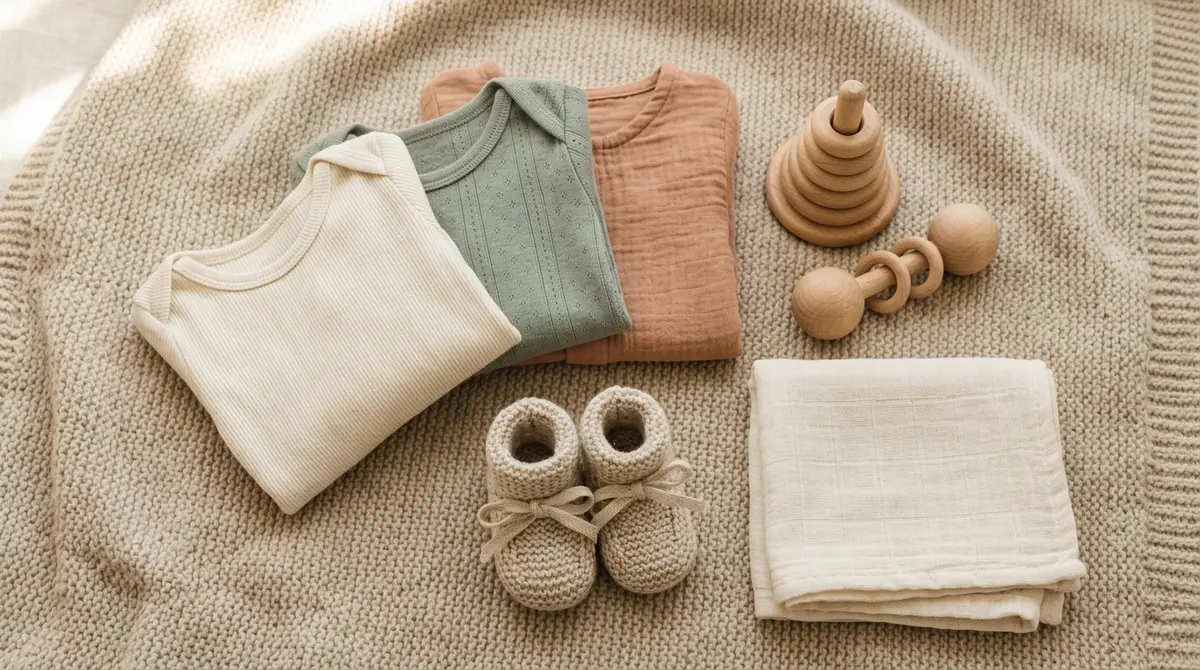
Most Malaysian baby-product advertising is governed by consumer law, not food law: of 28 ads from 19 named Malaysian baby advertisers reviewed for this guide, only three sell a food and none sells infant formula, follow-up formula, a feeding bottle or a teat. If your product is a food, the Food Regulations 1985 bar an infant-formula label from showing babies, mothers, bottles or teats, and Food Act 1983 s.17(1)(b) makes publishing an advertisement that carries what those regulations bar from the label an offence. Diapers, wipes, cots and strollers sit outside food law, but an unsubstantiated claim on them is still a false trade description under the Trade Descriptions Act 2011, and only JAKIM or a state Islamic Religious Council may certify anything halal. Meta publishes no infant-formula or baby-food standard at all, so Malaysian law reaches your ad through Meta's rule that ads must not be unlawful where they run.
You sell diapers, a convertible cot, a bamboo swaddle or a baby-cut fish range, and you want Malaysian parents to see it on Facebook and Instagram. The hard part is not the creative brief. It is knowing which rules you are under before you write a headline, because a diaper ad and a baby-cereal ad do not answer to the same law in this country. This guide separates the two, shows what real Malaysian baby advertisers actually run, and is honest about the parts nobody can confirm.
The short version
One question decides how much law your baby ad has to clear: is the thing you are selling a food?
Every baby advertiser here works against the same baseline. The Trade Descriptions Act 2011 governs the claims you make about goods, the halal certification and marking regime governs who may call anything halal, Meta's own advertising standards govern whether the ad runs at all, and a registered voluntary industry code sits alongside them with a statutory defence attached. If the product is a food, a second and much tighter layer lands on top: the Food Act 1983 and the Food Regulations 1985, where label prohibitions written for a tin reach your Facebook creative through s.17(1)(b). If it is not a food, and for most of this category it is not, that second layer never touches you.
That split is not theoretical. Across 28 ads from 19 named Malaysian baby advertisers, only three sell a food. The other 25 sell diapers, bags, cots, mats, swaddles, car seats, store openings and expo tickets, none of which the Food Act reaches at all. Get the classification right first and most of the compliance anxiety in this category evaporates. Get it wrong on a baby cereal and, on the words of s.17(1)(b), you have published an advertisement carrying something the regulations bar from that food's label. That offence carries up to three years' imprisonment, a fine, or both.
Meanwhile the commercial backdrop has turned. Malaysia recorded 414,918 live births in 2024, the lowest count since 1980 and a 9.0% fall from 455,761 the year before, with the crude birth rate down from 13.6 to 12.2 per 1,000 population. The cohort you are acquiring is shrinking. That should push spend toward retention, repeat purchase and higher basket value rather than toward ever-cheaper first orders.
Who actually advertises here, and why it matters
The composition of this category is the most useful thing on this page, because it tells you who you are bidding against and it corrects a widespread assumption about what Malaysian baby advertising looks like.
The single most striking fact is an absence. Not one of the 28 ads sells infant formula, follow-up formula, a feeding bottle or a teat. The regulated core of the baby category is missing from this set entirely. A 28-ad sample is not the whole Malaysian market, so read it as a strong signal rather than a census. The practical consequence still stands: the compliance surface most people worry about in this category is not the one these advertisers are operating on.
What fills the space instead breaks into five groups.
| Group | Brands in the set | What they advertise |
|---|---|---|
| Premium and organic diaper DTC | EARTH & ME, Applecrumby, Sally Softlove Malaysia, Peachy Bum Malaysia, Hey Tiger Malaysia | Material claims, comfort, overnight dryness, bundles |
| Mass-market diapers | MamyPoko Malaysia | Country-of-origin quality plus a functional add-on |
| Physical retailers | Baby World Malaysia, Beloved Baby, My Lovely Baby, Babydash, Perfect mom N baby, The Familys Place | Gear assortment, store openings, purchase-with-purchase deals |
| Single-product specialists | Comfy Baby, funbies, Tinytato, Bc Babycare Malaysia, Fish Club | One hero object, one sharp feature |
| Events and the unclassifiable | BIG Baby Expo, Relove | Discount stacks; one curiosity hook naming no product at all |
Two of those names need care. Relove's only archived ad names no product whatsoever, a chat screen teasing overnight wetness, so it cannot be called a diaper brand on this evidence. Bc Babycare Malaysia's only archived ad is a diaper backpack, which is a bag, not a diaper. Describe an advertiser by the ad you can actually see.
The format split is lopsided: 14 carousels, 7 statics, 5 dynamic and only 2 videos. This is a category that sells by showing many angles of one object rather than by telling a story over thirty seconds. Only one ad in the whole set is user-generated in style. That is composition, not a scoreboard, and the archive says nothing about which format performed. What it does tell you is how this corner of the category currently presents itself, and where a different format would sit against it. You can see the creatives themselves in the Malaysian baby-care gallery on AdPlay.ai if you want to read the layouts rather than the summaries.
The other surprise is geography. Physical retail is unusually prominent for a category most people treat as pure ecommerce. Beloved Baby announces a Perak store. My Lovely Baby announces a Setia Alam store with purchase-with-purchase deals up to 50%. If you run a shop, naming the town in the creative is a move the category already makes, not an odd one.
The question that decides your tier
Food Act 1983 s.2 defines "food" inclusively: every article manufactured, sold or represented for use as food or drink for human consumption, or which enters into or is used in the composition, preparation or preservation of any food or drink, plus confectionery, chewing substances and any ingredient of those things. That is broad. A plain fish fillet marketed for babies is a food. So is a rice cereal, a puree, a snack.
What is narrow is the special purpose food regime sitting on top. Regulations 389 to 393 of the Food Regulations 1985 set product-specific standards for a defined list of special purpose foods, and four of them are the ones that matter here: infant formula, follow-up formula, canned food for infants and children, and processed cereal-based foods for infants and young children. Reg 388(7) defines "infant" as any person up to 12 months of age and "children" as any person from more than 12 months up to three years.
So there are three tiers, not two:
- Not a food at all. Diapers, wipes, clothing, strollers, car seats, cots, changing mats, swaddles, diaper bags, expo tickets. No food law. This is 25 of the 28 ads.
- A food, but with no special purpose standard of its own. General reg 18 label prohibitions apply, and reg 388(3) raises a further question covered below.
- A food inside the special purpose regime. Infant formula, follow-up formula, canned infant food, processed cereal-based foods. The tightest rules in the category.
Work out your tier before anything else. Everything downstream depends on it.
How a label rule ends up governing your Facebook ad
The mechanism is worth understanding properly, because it is the part most advertisers miss.
Food Act 1983 s.17(1) makes it an offence for any person, for the purpose of affecting or promoting the sale of any food, to publish or cause to be published an advertisement relating to that food which, among other things, is "prohibited by any such regulations from being marked on or attached to such food", or which "is likely to deceive a purchaser with regard to the character, nature, value, substance, quality, strength, purity, composition, merit or safety, weight, proportion, origin, age or effects of any food". Conviction carries imprisonment for a term not exceeding three years, or a fine, or both.
"Advertisement" is defined inclusively in s.2 as any representation by any means whatsoever for the purposes of promoting directly or indirectly the sale or other disposal of any food. A paid Meta placement is a representation by a means.
Two neighbouring provisions travel with it. Section 15 makes it an offence to advertise a food that does not comply with a prescribed standard in a manner likely to be mistaken for food of that standard. Section 16 covers false or misleading labelling.
One honest qualification. The read-across from a label prohibition to a Meta placement follows the words of s.17(1)(b) plainly enough, but no Malaysian authority applying it to a social ad was found during research for this guide. Treat it as the mechanism the statute's words create, not as a decided case. That is a reason to comply, not a reason to gamble.
Infant formula and follow-up formula: the imagery rules
Malaysia has no dedicated breast-milk-substitutes statute, and no blanket statutory ban on advertising formula. Neither of those facts means the category is unregulated. The WHO, UNICEF and IBFAN status report published in May 2026 classifies Malaysia as "Some provisions of the Code included", scores it 26 out of 100, dates its most recent legal measure to 2020, and names the instruments as the Food Act 1983 and the Food Regulations 1985. Alongside those, the Ministry of Health's Code of Ethics for the Marketing of Infant Foods and Related Products is a voluntary code, not law.
The binding part is the labelling. Reg 389(8) provides that the label of an infant formula "shall not display any picture or graphic of infants or babies or parts of infants or babies, mothers feeding bottles or teats", with an exception for graphics illustrating the method of preparation. Reg 389(9) provides that no label of an infant formula shall display any claim of superiority of the product to breast milk. Both prohibitions repeat for follow-up formula at regs 389A(13) and 389A(14).
Read that alongside s.17(1)(b), with the qualification above still attached, and the creative consequence is stark. The visual vocabulary an advertiser would instinctively reach for, a baby, a mother, a bottle, is precisely what the label may not carry, and what the label may not carry is what the advertisement may not carry.
Baby cereal carries the tightest imagery rule in the category
If you sell a processed cereal-based food for infants and young children, and that is the correct regulatory name for it, the rules go further than for formula.
Reg 391(19): no label of a processed cereal-based food for infants and young children shall display any picture, graphic or text which idealises the use of the product. Reg 391(20): no picture or graphic of an infant less than six months shall be displayed on such a label at all.
"Idealises" is the regulation's word, and the safe way to plan creative around a word like that is to read it conservatively. On a cautious reading it takes out the blissful spoon-feeding shot, the beaming baby and the aspirational kitchen scene, which is most of the stock library for this product type.
Reg 391(17)(a) then mandates two statements, in not less than 10 point lettering: "NOT TO BE GIVEN TO INFANTS BELOW SIX (6) MONTHS OF AGE UNLESS ADVISED BY HEALTH PROFESSIONAL" and "FOR OPTIMAL INFANT HEALTH, BREASTFEEDING SHOULD CONTINUE UP TO TWO (2) YEARS OF AGE ALONG WITH COMPLEMENTARY FEEDING".
This is live for real Malaysian advertisers. Perfect mom N baby runs a carousel for an organic rice cereal for babies from six months. A brand in that position has to build creative that sells without idealising and without a young infant in frame, which is a genuinely hard brief and a good argument for leading on the pack, the ingredient and the preparation rather than on the child.
The claims a food label cannot make, and what that does to a hook
Reg 18(6) prohibits a food label from including any claim which cannot be substantiated, any claim as to the suitability of a food for use in the prevention, alleviation, treatment or cure of a disease, disorder or particular physiological condition except as otherwise permitted, or any claim "which could give rise to doubt about the safety of a similar food or arouse or exploit fear in the consumer".
That last limb is the one that reshapes creative strategy in this category, because the fear hook that runs freely on diapers is constrained the moment the product is a food.
Fish Club runs the angle that sits closest to this rule: a carousel on why you should not buy Atlantic cod for your baby, alongside a deboned baby-cut fish range. It is the sharpest hook in the whole set and the one carrying the most legal exposure, because a claim casting doubt on the safety of a comparable food is what reg 18(6)(e) describes, and on the s.17(1)(b) reading set out above that prohibition travels into the advertisement.
The "preservative-free" descriptor on the same range needs a separate check rather than an assumption. Reg 18(4)(b) bars claiming the absence of a food additive whose addition the Regulations already prohibit in that food class. Whether preservatives are permitted in that particular class is a question to answer against reg 20 and the applicable standard before the phrase goes into a headline. Do not treat it as a settled breach and do not treat it as clear.
Two more reg 18 provisions are worth having in the room. Reg 18(3) bars the words "compounded", "medicated", "tonic" or "health" on any food label. Reg 18(7) ties "organic", "biological", "ecological" and "biodynamic" on a food label to conformity with Malaysian Standard MS 1529.
And one more sits outside the label rules entirely. Reg 388(3) provides that no person shall import, manufacture or advertise for sale, or sell, any food other than those prescribed in regulations 389 to 393 as special purpose food without the prior written approval of the Director. The trigger is the reg 388(1) description test: whether the food is named or described as particularly suitable for consumption by persons requiring special nutritional needs. Whether a baby-marketed fish range meets that test is genuinely unresolved, and no published Ministry of Health guidance clarifying the boundary was found. If you sell a baby-marketed food with no standard of its own, this is the question to put to a regulatory adviser before you spend.
If you sell everything else: the rules that still reach you
Twenty-five of the 28 ads are outside food law, which does not make them unregulated. Everything below reaches a baby food too, so a food advertiser reads this section as well as the last one, not instead of it.
The Trade Descriptions Act 2011. Section 5 makes it an offence to apply a false trade description to goods, or to supply or offer to supply goods so described. That is the provision that governs "organic", "bamboo", "chlorine-free", "hypoallergenic" and every comparison claim on a non-food product. EARTH & ME runs a bamboo-versus-normal-diaper comparison for rash-prone skin, and Peachy Bum Malaysia opens a carousel asking parents whether they want truly comfortable diapers. Because a diaper is not a food, reg 18(6)(e) does not reach either. Section 5 does, and a denigratory comparison you cannot substantiate is the exposed version of that angle.
Halal. The Trade Descriptions (Certification and Marking of Halal) Order 2011, subsidiary legislation made under the Trade Descriptions Act 2011 and enforced by KPDN, names the Department of Islamic Development Malaysia federally and the state Islamic Religious Councils at state level as the only competent authorities that may certify a product halal. It applies to all food and goods, so it reaches diapers and wipes, not only baby food. That is why one of the most interesting choices in the set is Applecrumby's lifestyle carousel featuring a hijabi mum and her two children: it carries the trust cue through representation rather than through a claim that would need certifying. If you do want to make the claim itself, the halal claims guide covers who certifies, what the logo rules are, and the penalties.
Medicine advertising. A baby product advertised as treating or preventing a condition, a nappy-rash cream or a colic remedy for instance, leaves consumer goods and enters medicine advertising under s.4B of the Medicines (Advertisement and Sale) Act 1956, which requires prior approval from the Medicine Advertisements Board. The KKLIU approval guide covers the process. One caution to carry: MAB-approved advertisements are issued a KKLIU reference, but s.4B says nothing about a number or its display, so confirm the display requirement against the Board's current procedure before you state it as a rule.
Substantiating a discount. BIG Baby Expo runs a carousel headlining expo deals up to 95% off. A percentage-off headline of that size has to survive substantiation: be able to show a product actually sold at that discount. Whether a specific price-display or special-sale permit requirement also applies was not verified for this guide, so treat that as an open question rather than a stated rule.
What Meta's rulebook does and does not say
Three findings, and the first surprises most people.
There is no infant-formula or baby-food rule anywhere in Meta's advertising standards. The Health and Wellness standard never mentions infant formula, baby food or children's nutrition. It requires ads promoting dietary, health, weight-loss or weight-gain products and services to target people at least 18 years or older, and it expressly lists general food products, including protein products, as carrying no age restriction. Nothing in the Advertising Standards index covers breast-milk substitutes. So there is no published standard for a formula ad to trip over, which is not the same as saying nothing will happen: no published policy is not proof that no local enforcement exists, and the route below is exactly how local law gets in.
Malaysian law reaches Meta ads through Meta's own local-law rule. The Locally Illegal Content standard states plainly that ads on Facebook and Instagram must not be unlawful, and Meta may remove ads reported as unlawful globally, or locally restrict content reported by governments, courts, NGOs or the public. That is the enforcement route, and it points straight back to the Food Act.
Pregnancy and parental status are not in the Personal Attributes list. The enumerated attributes are race, ethnicity, religion, beliefs, age, sexual orientation or practices, gender identity, disability, physical or mental health including medical conditions, vulnerable financial status, voting status, trade union membership, criminal record and name. A hook addressed to expectant parents is not caught by that list. A hook naming a medical condition is. Write it as "not caught by the enumerated list", never as "safe", because Meta enforces beyond the letter. The Personal Attributes guide has the rewrite patterns, and the confinement centre guide covers the same parent at an earlier buying moment.
Two operational notes. Breastfeeding imagery is permitted under the Adult Nudity standard in medical, health or breastfeeding contexts, and the policy says such ads should target users above 18. And any audience that includes people under 18 loses almost all targeting controls: Meta announced in January 2023 that beginning in February that year, advertisers reaching teens could use age and location only, with gender removed and teens' in-app activity no longer informing the ads they see. Meta published "beginning in February" without naming a day. This rarely bites a baby advertiser targeting parents, but it matters the moment you set an audience with no lower age floor.
The Content Code, and the children's advertising standard people misquote
Malaysia's Content Code 2022, Third Edition, was registered by MCMC on 30 May 2022. Its status is often described wrongly in both directions, so be precise: Part 1 paragraph 6.2 states that compliance is voluntary, subject to s.99 of the Communications and Multimedia Act 1998, and Part 1 paragraph 6.3 states that compliance is a defence against any prosecution, action or proceeding, mirroring s.98(2) of the Act. MCMC may direct a party to comply under s.99, and failing to comply with such a direction carries a financial penalty of up to RM500,000 under s.99(2), inserted by section 33 of the Communications and Multimedia (Amendment) Act 2025 and in force since 11 February 2025. It replaced the RM200,000 civil penalty in section 100, which the same Act deleted, so a checklist still citing s.100 is describing repealed law. So it is neither a mandatory rulebook nor optional decoration. It is a registered voluntary code with a statutory safe harbour and a direction power behind it.
Part 3 applies to advertisements communicated over a networked medium, expressly including digital media, and clause 1.3 places primary responsibility on advertisers and online marketplace operators, with influencers among those also obliged. So paid social and influencer content are squarely inside its scope.
Two clauses matter for this category. Clause 7.2(e): if it includes a price, an advertisement for a children's product or service shall not use qualifiers such as "only" or "just" to make the price seem less expensive. Clause 7.2(m) bars implying that children are likely to be ridiculed, inferior to others, less popular, disloyal or to have let someone down if they or their family do not use a product. The Code defines a child as a person below 18, so "a children's product" reads broadly.
Worth stating for accuracy: none of the 28 archived ads uses "only" or "just" alongside a price, so this is a standard to know rather than a habit to break. A Content Code Review public consultation ran from 17 September to 7 November 2025 with submissions still under review and no successor announced, so clause numbers may move. Cite the edition and date whenever you quote one.
The angles the category actually runs
Every angle below is evidence about what is advertised and how it is said. It is not evidence about results. The Meta Ad Library publishes no spend, impressions, CPM, CTR, cost per acquisition or return on ad spend for non-political ads, and how long an ad appears to have run is an artefact of when it was captured, not proof that it worked. Read the list as a menu of framings the category already uses, not a leaderboard.
| Angle | Who runs it | The mechanic |
|---|---|---|
| Side-by-side material comparison | EARTH & ME | Bamboo versus normal diapers for rash-prone skin |
| Curiosity question as the opener | Peachy Bum Malaysia, Relove | A question or a teasing scene instead of a product shot |
| The five-star review as the creative | Peachy Bum Malaysia, Hey Tiger Malaysia | Repeat-order social proof carries the whole ad |
| Plain switch testimonial | Applecrumby | A mum whose baby stays leak-free and comfy all night |
| Ringgit arithmetic, not a percentage | Applecrumby, Sally Softlove Malaysia | RM150 of essentials for RM130; a 168-piece three-pack |
| One object, three jobs | Comfy Baby, funbies, Baby World Malaysia, The Familys Place | Convertibility as the entire feature claim |
| Rental instead of a discount | funbies | Try the change table first, the only low-commitment mechanic in the set |
| Store opening, town named | Beloved Baby, My Lovely Baby | Physical catchment inside an ecommerce-shaped category |
| Event deal stack | BIG Baby Expo | The discount headline is the product |
| Contrarian food-safety hook | Fish Club | Why not to buy a particular fish for your baby |
| Muslim-family representation | Applecrumby | Trust cue carried by casting, with nothing to certify |
| Origin plus a functional add-on | MamyPoko Malaysia | Japan-quality pants with lemongrass mosquito protection |
| One anatomical detail | Sally Softlove Malaysia | A newborn diaper with a navel-cut neckline |
| Show the whole wall | Perfect mom N baby, Babydash | Breadth of stock is the argument |
| UGC material demonstration | EARTH & ME | A mum showing softness and breathability on camera |
Two of these carry a caution. MamyPoko's mosquito-protection add-on is the kind of claim worth checking before it is written as protection rather than as a scent, because whether a repellent claim on a non-food product engages pesticide registration or medicinal-claim controls was not resolved during research. And the comparison angle, as noted above, lives under Trade Descriptions Act s.5 whenever it disparages an alternative.
What a baby-care ad should cost, honestly
There is no dated, primary Malaysian benchmark for this category. No neutral, sourced Malaysian CPM, CPC, cost per lead, cost per purchase, click-through rate or return on ad spend figure for baby care was found. Anyone quoting one confidently is quoting something unsourced.
The nearest usable third-party data is WordStream's 2025 US benchmark set, built from US-based traffic campaigns run between 1 April 2024 and 30 June 2025, reported as medians in US dollars. Its closest line to baby goods is Apparel, Fashion and Jewellery at a 1.29% click-through rate and US$0.86 cost per click. Note the limitation honestly: that dataset contains no baby, children or family vertical at all, so this is a proxy from a different industry in a different country and a different currency. It tells you roughly how ecommerce click economics behave. It does not tell you what a Malaysian diaper sale costs.
Use it to calibrate expectations, then get your real number from your own account. The broader argument, and why local benchmark figures circulating online should be treated with suspicion, is set out in the Facebook ads cost guide.
One structural point that the birth statistics make sharper. With live births at 414,918 in 2024, down 9.0% year on year and the lowest since 1980, the pool of new parents entering the category each year is contracting. That argues for measuring lifetime value across a subscription or replenishment cycle rather than judging a campaign on first-order profitability, and for putting real budget behind retention creative aimed at existing customers, which is cheaper ground than a shrinking acquisition pool.
What nobody could confirm
A guide that flags its gaps is more useful than one that guesses. These are the questions this research could not close.
Whether the Food Act s.17(3)(a) exemption covers a Facebook ad is unresolved. Section 17(2) requires an advertisement to state the advertiser's true name and address, or a company's registered office. Section 17(3)(a) disapplies that for advertisements published orally or by any means of producing or transmitting light or sound, which was written for broadcast and cinema, and no Malaysian authority applying it to a social placement was found. Section 17(3)(b) preserves every other labelling provision regardless.
Whether a baby-marketed food with no prescribed standard is a "special purpose food" needing the Director's prior written approval before it may be advertised is likewise open, and it is the highest-stakes open question here because reg 388(3) bites at the advertising stage.
Whether the Ministry of Health's Code of Ethics screening remit extends to paid social and influencer creative, and whether the Code binds non-signatory direct-to-consumer brands at all, could not be established: the Nutrition Division pages hosting the Code were unreachable during research, so its own scope clause has not been read in the original. For the same reason, no edition date for that Code appears anywhere in this guide.
And whether a mosquito-protection claim on a diaper engages pesticide registration, and whether an "up to 95% off" headline attracts a specific permit requirement, both remain unverified.
None of these is a reason to stall a diaper campaign. All of them are reasons to get a regulatory opinion before you launch a baby food.
The pre-launch check
Before the ad goes live, run it against six questions.
- Is the product a food under the Food Act's inclusive s.2 definition? If yes, does it sit inside the special purpose regime at regs 389 to 393?
- If it is a food, does the creative carry anything the regulations bar from that food's label: a baby, a mother, a bottle or a teat on formula; an idealising image or an infant under six months on cereal; a claim of superiority to breast milk; an absence claim about pork, beef, lard or added alcohol?
- Can every material claim be substantiated with a document you could produce on request? Organic, bamboo, chlorine-free, hypoallergenic, a comparison against a rival, an "up to X% off" headline.
- Does the ad claim to treat or prevent anything? If so, it belongs in the Medicine Advertisements Board process, not in Ads Manager.
- Does it assert halal without certification from JAKIM or a state Islamic Religious Council? Representation is not a claim; wording is.
- Does the audience have a lower age floor of 18, particularly if the creative uses breastfeeding imagery?
Clear those six and the remaining work is the ordinary craft: a carousel that shows one object doing three jobs, an offer stated in ringgit rather than percentages, and a town name in the headline if you have a shop for parents to walk into.
By the numbers
Frequently asked questions
Is it legal to advertise infant formula on Facebook in Malaysia?
There is no blanket statutory ban on advertising infant formula in Malaysia, but that is not the same as a free hand. The Food Regulations 1985 prohibit an infant-formula label from displaying any picture or graphic of infants or babies, parts of infants or babies, mothers, feeding bottles or teats, with an exception for graphics illustrating the method of preparation, and prohibit any claim that the product is superior to breast milk. The same two prohibitions repeat for follow-up formula. Food Act 1983 s.17(1)(b) then makes it an offence to publish an advertisement carrying something the regulations bar from that food's label, which is the mechanism that moves those imagery rules off the tin and into a Meta placement. No Malaysian authority applying s.17(1)(b) to a social ad was found, so treat it as the mechanism the words create rather than a decided case. Separately, the Ministry of Health's Code of Ethics for the Marketing of Infant Foods and Related Products is a voluntary code, not law.
Does food law apply to my diaper, stroller or cot ads?
No. The Food Act 1983 defines food inclusively as every article manufactured, sold or represented for use as food or drink for human consumption, so it reaches any baby food, but nothing in it reaches a diaper, a wipe, clothing, a stroller, a car seat, a cot, a changing mat, a swaddle, a diaper bag or a baby expo. What is narrow is the layer sitting on top of it: the special purpose food standards in regulations 389 to 393, whose baby-relevant entries are infant formula, follow-up formula, canned food for infants and children, and processed cereal-based foods for infants and young children. In the set of 28 Malaysian baby ads reviewed for this guide, 25 sit entirely outside food law. Those 25 still answer to consumer law, principally the Trade Descriptions Act 2011, and to Meta's own advertising standards.
Can I describe my diaper as organic in a Malaysian Facebook ad?
The food rule does not reach it, but the word is not free. Food Regulations 1985 reg 18(7) ties 'organic', 'biological', 'ecological' and 'biodynamic' on a food label to conformity with Malaysian Standard MS 1529, and a diaper is not a food, so that provision does not apply. What does apply is the Trade Descriptions Act 2011 s.5, which makes it an offence to apply a false trade description to goods or to supply goods so described. An 'organic' or 'bamboo' description you cannot substantiate is exposed under that section regardless of the product category. The practical test is documentary: before the claim goes into a headline, be able to produce the certification, the fibre content or the mill documentation that backs it, and keep it where whoever answers a complaint can find it.
Can I write 'no pork' or 'pork-free' in a baby-food ad?
Not on a food. Food Regulations 1985 reg 18(4) prohibits a food label from including any claim on the absence of beef or pork or their derivatives, lard or added alcohol if the food never contained those ingredients, and reg 18(4)(b) extends the same logic to a food additive or nutrient supplement whose addition the Regulations already prohibit. Food Act 1983 s.17(1)(b) carries that prohibition into the advertisement. The lawful route to the same reassurance is certification: only the Department of Islamic Development Malaysia federally and the state Islamic Religious Councils may certify a product halal, and that regime covers all food and goods, so it reaches diapers and wipes too. Note the scope carefully, though. Reg 18(4) is a food-label rule, so it does not by itself reach a 'pork-free' line on a diaper or a wipe.
Will Meta reject an ad that asks 'Are you expecting?'
Not under the letter of the Personal Attributes standard. Meta's Privacy Violations and Personal Attributes policy bars direct or indirect assertions or implications about a person's race, ethnicity, religion, beliefs, age, sexual orientation or practices, gender identity, disability, physical or mental health including medical conditions, vulnerable financial status, voting status, trade union membership, criminal record, or name. Pregnancy and parental or family status appear nowhere in that enumerated list, and no pregnancy example appears in the policy text. Write that as 'not caught by the enumerated list', never as 'safe': Meta enforces beyond the letter and the standard is not a safe harbour. Where you genuinely get caught is a hook that names a medical condition, because 'physical or mental health (including medical conditions)' is enumerated. 'Do you have diabetes?' is the policy's own prohibited example, while 'New diabetes treatment available' is listed as allowed.
Can I show breastfeeding in a Facebook ad?
Yes, with an age condition. Meta's Adult Nudity and Sexual Activity advertising standard permits imagery depicting female nipples in medical, health or breastfeeding contexts, and says such ads should target users above the age of 18. Use the policy's own verb: it says 'should target', not 'may only run where'. The practical read is that a breastfeeding-context creative is allowed but that setting a minimum age of 18 in Ads Manager is the sensible default, and it costs you almost nothing in a category whose buyers are adults anyway. Every other form of nudity is prohibited in ads, including near-nudity covered only by a digital overlay, so a lifestyle shot that leans further than the breastfeeding context carries no equivalent allowance.
Do I need approval before advertising a nappy-rash cream?
If the ad presents the product as treating or preventing a condition, you have left consumer goods and entered medicine advertising. The Medicines (Advertisement and Sale) Act 1956 s.4B provides that no person may take part in publishing an advertisement referring to an article in terms calculated to lead to its use as a medicine, an appliance or a remedy for the treatment or prevention of diseases or conditions of human beings, unless the Medicine Advertisements Board has approved it. The penalty under s.5(1) is a fine not exceeding RM3,000 or imprisonment up to one year on a first conviction, and RM5,000 or two years on a subsequent one. Approved advertisements are issued a KKLIU reference, but s.4B itself says nothing about displaying a number, so confirm the display requirement against the Board's current procedure before treating it as a rule. The same crossover applies to a colic remedy or anything else pitched as a cure.
What should a baby-care Facebook ad cost me in Malaysia?
No dated, primary Malaysian benchmark exists for baby-care Facebook advertising. There is no neutral, sourced Malaysian CPM, CPC, cost per lead, cost per purchase, click-through rate or return on ad spend figure for this category that this guide can honestly hand you, and any confident 'RM X per purchase for Malaysian baby brands' you find online is almost certainly unsourced. The nearest third-party data is WordStream's 2025 US benchmark set, drawn from US traffic campaigns run between April 2024 and June 2025, which puts Apparel, Fashion and Jewellery at a 1.29% click-through rate and US$0.86 cost per click. Note the important limitation: that dataset contains no baby, children or family vertical at all, so the nearest comparable line is a proxy for a different industry in a different country. Read your own account after two to three weeks of spend and use that as the number you plan against.
Sources
- 1.Attorney General's Chambers, Food Act 1983 (Act 281) full text (1983)
- 2.Attorney General's Chambers, Act 281 and its subsidiary legislation, including the Food Regulations 1985 [P.U.(A) 437/1985] as consolidated to P.U.(A) 208/2020 (2020)
- 3.Attorney General's Chambers, Trade Descriptions Act 2011 (Act 730) (2011)
- 4.Attorney General's Chambers, Medicines (Advertisement and Sale) Act 1956 (Act 290) (1956)
- 5.Ministry of Domestic Trade and Cost of Living (KPDN), Trade Description enforcement and the halal certification and marking orders (2026)
- 6.Communications and Multimedia Content Forum, Content Code 2022 (Third Edition), registered 30 May 2022 (2022)
- 7.WHO/UNICEF/IBFAN, Marketing of breast-milk substitutes: national implementation of the International Code, status report 2026 (2026)
- 8.Meta Transparency Center, Health and Wellness advertising standard (2026)
- 9.Meta Transparency Center, Locally Illegal Content, Products or Services (2026)
- 10.Meta Transparency Center, Privacy Violations and Personal Attributes (2026)
- 11.Meta Transparency Center, Adult Nudity and Sexual Activity advertising standard (2026)
- 12.Meta Newsroom, Age-Appropriate Ads for Teens (2023)
- 13.Department of Statistics Malaysia, Vital Statistics, Malaysia, 2025 (released 16 October 2025) (2025)
- 14.DataReportal, Digital 2026: Malaysia (2026)
- 15.WordStream, Facebook Ads Benchmarks 2025 (US medians, no baby or family vertical) (2025)
Keep exploring
Turn ad research into winning ads
See what 16,000 Malaysian brands advertise, then generate on-brand creative, all in one tool.
7-day free trial · No credit card required