
Gym & Fitness Studio Facebook Ads (Malaysia)
How Malaysian gyms and fitness studios run compliant Facebook and Instagram ads: policy-safe creative, trial-to-membership funnels, WhatsApp enquiries and local targeting.
Updated August 2026 · Xanny Lee, CEO
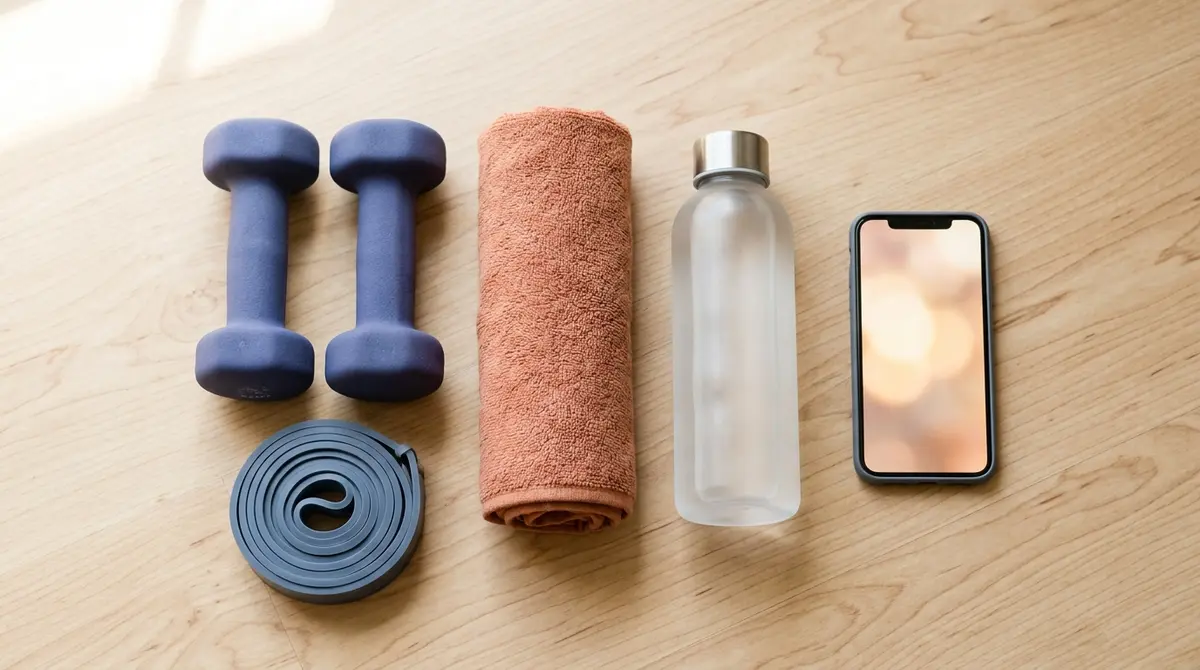
Malaysian fitness studios win on Facebook and Instagram by selling the class, the coaching and the community, not an idealised body. Meta's 2026 Health and Wellness standard bars ads that create negative self-perception or imply a perfect body type, and its Personal Attributes policy bars copy that assumes the viewer has a health condition. Run a low-friction trial-class offer through click-to-WhatsApp or lead forms, target a real catchment radius around your studio, and measure cost-per-trial and cost-per-membership from your own account, because no dated Malaysian fitness benchmark exists.
You run a studio in KL, PJ, Johor or Penang, your timetable has open slots, and you know most of your future members are scrolling Facebook and Instagram right now. The hard part is not reach, it is writing ads that Meta will actually approve and that turn a curious scroller into a booked trial. This guide walks through the policy lines fitness ads keep crossing, the funnel that fills classes, and how to judge your numbers honestly.
The short version
A fitness studio in Malaysia does not lose on Facebook and Instagram because of reach. Meta's potential ad reach here is roughly 23.0 million on Facebook and 16.1 million on Instagram, per DataReportal's Digital 2026 report, in a country of about 36.1 million people with around 30.7 million active social media identities. Your future members are on-platform. You lose on two things: ads Meta rejects, and ads that get approved but never convert a scroller into a booked trial.
The fix is a mindset shift. Sell the class, the coaching and the community, not a body. Meta's 2026 Health and Wellness standard bars ads that create negative self-perception or imply there is a perfect body type to aspire to, and its Personal Attributes policy bars copy that assumes the viewer has a health or weight condition. Once your creative respects those lines, the machinery is straightforward: a low-friction trial offer at the top, a membership close after, enquiries handled through WhatsApp or lead forms, and a targeting radius that matches who can actually reach your door. Everything below expands on that. If you are new to campaign mechanics generally, start with the pillar guide on how to run a Facebook ad and come back for the fitness-specific parts.
What Meta's rules actually mean for a studio
Two policies do most of the rejecting in this category, and both are worth reading in full before you write a single line of copy.
The first is the Personal Attributes policy. Meta prohibits ads that assert or imply a person's physical or mental health. The Transparency Center gives verbatim examples: "Do you have diabetes?" is prohibited, while "New diabetes treatment available" is allowed; "Depression getting you down? Get help now." is prohibited, while "Depression counseling" is allowed. The pattern is clear. Second-person copy that assumes the viewer has a condition is banned. Generic references to the service are fine. For a gym, that means a hook implying you know the reader is overweight, unfit or unhappy with their body will get flagged. The Personal Attributes policy guide covers this trap in more detail across industries.
The second is the Health and Wellness standard. It bars ads that create negative self-perception, that declare there is a perfect body type or appearance one should aspire to, and that exploit insecurities to conform to certain beauty standards. It also requires that ads promoting dietary, health or weight-loss products and services be targeted only to adults 18 years or older. If your angle is weight loss or slimming, set the minimum age to 18. And it restricts side-by-side weight-loss transformation comparisons, with a specific carve-out that references fitness-class impact such as Pilates.
Here is a practical map of what those rules do to common fitness ad ideas.
| Ad idea | Policy risk | Safer version |
|---|---|---|
| "Struggling with belly fat?" | Personal Attributes: implies the viewer's body/health | "Join a beginner-friendly HIIT class this week" |
| Side-by-side slim-down before/after | Health & Wellness: restricted transformation comparison | Class-in-action clip, coach correcting form, skill progress |
| "Get your dream body" imagery | Health & Wellness: idealised body type | "Train with a coach who scales every workout to you" |
| Weight-loss offer to all ages | Health & Wellness: must be 18+ | Same offer, minimum age set to 18 |
| "Are you unfit and out of shape?" | Personal Attributes: implies a condition | "New members' first class is free" |
None of this stops you selling results. It stops you selling shame. That distinction is the whole game.
If an ad is rejected, do not panic and rebuild everything. Read the specific policy Meta names in the rejection notice, edit the offending line or image, and resubmit for another review. Most fitness rejections clear once the "you"-focused hook or the transformation photo is swapped for compliant copy, because the fix is usually a single sentence rather than a whole new concept. Guessing at the cause wastes days; the notice tells you which standard tripped.
Rewriting the hooks that get you rejected
Most rejected fitness ads share one habit: they open with a "you" that assumes something about the reader. "Tired of not fitting your clothes?" "Embarrassed at the beach?" "Struggling to lose weight?" Each one implies knowledge of the viewer's body or state, which is exactly what the Personal Attributes policy prohibits.
Swap the diagnosis for an invitation. Benefit-led and offer-led copy sidesteps the whole problem because it never claims to know anything about the reader. "First class free this week." "Beginner-friendly strength class, small groups, real coaching." "Join a 6am HIIT class near Bangsar." These sell the same outcome without pointing a finger at the viewer.
The mechanics of a good hook still apply here; you want to earn the thumb-stop in the first second. The difference is that a compliant fitness hook earns attention through the offer, the class energy or the location, not through insecurity. A deeper library of opening lines helps, as long as you run every one of them through the fitness filter above before it goes live.
One more rewrite worth internalising: strip superlatives about bodies. "Perfect abs in 30 days" runs straight into the "perfect body type" language the Health and Wellness standard names. "Build strength and stamina in a supportive class" says something real without promising an idealised outcome.
Results content without breaking the rules
Member results are your best proof, and you can absolutely use them, you just have to frame them around behaviour and effort rather than an idealised silhouette. The Health and Wellness standard restricts side-by-side weight-loss comparisons but notes a carve-out referencing fitness-class impact. Read that conservatively: idealised before-and-after body comparisons are the risk area, and fitness-class context is the exception.
In practice, safer proof looks like a member talking about lifting heavier, finishing their first class without stopping, or showing up three times a week for a month. It looks like the energy of a full class, a coach spotting a lift, a community that celebrates a personal best. It does not look like a slimmed-down waist next to a "before" shot. If you want to run any comparison-style creative at all, keep it about capability and consistency, and get written consent from the member first. Our guide to before-and-after ads walks through how to build this kind of proof creative in a way that respects the policy line rather than gambling on it.
Do not assume the fitness-class exception also waives the 18-plus age requirement. The policy text does not say that, so if your creative leans weight-loss, keep the audience adult regardless of how you frame the visuals.
Two funnel stages: trial, then membership
The single biggest structural mistake studios make is treating "get a member" as one ad campaign. It is two stages, and they cost different amounts.
The top of funnel is a low-friction trial. A free trial class, a one-week pass, a discounted intro. Its job is to get a stranger through your door once. The bottom of funnel is the membership close, which usually happens in person or in chat after the trial, not in the ad. Measure these separately: cost-per-trial for the ad, and cost-per-membership for the whole journey.
Then weigh both against lifetime value, not first payment. A member who pays a monthly fee and stays several months is worth far more than the first month's revenue, so a cost-per-membership that looks expensive against one month can be very profitable against retention times monthly fee. That is the number that tells you how hard to push. Malaysia has plenty of established chains, from Anytime Fitness and Fitness First to Celebrity Fitness and Chi Fitness, competing for the same catchments, so your economics, not a rival's, should set your ceiling. We deliberately do not quote their prices here because reliable, dated figures were not available; work from your own fees.
To make that concrete without inventing numbers, run the math on your own figures. Take your monthly fee, multiply it by the average number of months a member actually stays, and you have a rough lifetime value. If a membership is worth several months of fees, you can afford a cost-per-membership that dwarfs a single month's payment and still profit comfortably. The mistake is judging the ad against first-month revenue, taking fright at the cost-per-trial, and switching everything off before a single trial has had the chance to convert and stay. Hold your nerve, keep the funnel measured stage by stage, and let the retention side of the equation carry the return.
A clean structure looks like this: one campaign driving trial enquiries, a follow-up process (human or automated) that books and converts, and a retargeting layer for people who engaged but did not book. The broader logic is the same one that governs any account: separate cold acquisition from warm conversion so each stage is measured, and paid for, on its own terms.
Click-to-WhatsApp or lead forms: pick your enquiry mechanic
Malaysians enquire on WhatsApp. That behaviour makes click-to-WhatsApp ads a natural fit for a studio: the ad opens a chat, and Meta's messaging rules give you room to reply for free. A message from a click-to-WhatsApp ad opens a 24-hour customer service window, and replying within it opens a Free Entry Point window that stays open for 72 hours, during which all messages, including templates, are free. Per-message pricing applies from 1 July 2025, but that free runway is generous enough for a human or a simple bot to qualify the lead, answer questions and book a trial without a messaging cost. The full mechanics are covered in the WhatsApp ads for Malaysia guide.
The alternative is lead ads with instant forms. These open inside Facebook or Instagram and pre-fill fields like name, email and phone from the user's account, which the person can edit before submitting. That lowers friction versus sending someone to a landing page, and it drops enquiries into a structured list your front desk can work through. The trade-off is that a form lead is colder than a live chat; you still have to call or message them.
Choose by how you actually close. If your team sells through conversation, use WhatsApp. If you prefer a tidy CRM list and a disciplined callback process, use lead ads. Many studios run both and compare cost-per-trial between them. Whichever you pick, speed of first response is the hidden variable: a lead that sits for a day is a lead that has already visited a competitor.
Wire the follow-up before you spend a single ringgit. For WhatsApp, that means a greeting message and a couple of quick-reply buttons that answer the obvious questions, class times, price and location, so an enquiry never sits in silence while a prospect's interest cools. For lead forms, it means one person owns the callback list and works it the same day, ideally within the hour. The ad only buys the enquiry; the booking is won in the reply, and the studios that grow are simply the ones that answer fastest.
Targeting the people who can actually reach you
A studio is a physical place, so your best targeting tool is a radius, not an interest list. In Meta Ads Manager you drop a pin on your studio address and set a radius around it. Outside the US, the radius range is commonly cited as 1 km to 70 km, though the exact current maximum is worth confirming in your own account, since Meta's help pages did not render a definitive figure at the time of writing.
Match the radius to your real catchment. In dense urban areas like central KL or PJ, a few kilometres usually captures everyone who would realistically commute to a class; go wider and you pay to reach people who will never show up. In suburban or regional towns where people drive further, widen the radius. And remember Meta's default matches people "living in or recently in" the location, so you also reach nearby office workers and commuters who pass through your area, not only residents. For a studio near an office cluster, that is a feature, not a bug.
Resist the urge to layer heavy interest targeting on top of a tight radius; you can starve the audience. In a small catchment, a broad, location-led audience usually delivers more efficiently than a heavily filtered one. The geo specifics of setting this up are covered in location targeting.
What a lead should cost, honestly
Here is the honest part. There is no dated, primary Malaysian cost-per-lead, cost-per-trial, cost-per-membership, CPM or CTR benchmark for gyms and fitness studios that this guide can point you to. Any confident "RM X per fitness lead in Malaysia" figure you find online is almost certainly unsourced. Do not plan against it.
What does exist is US data, which you can use only to understand how cost behaves, never as your local price. WordStream's 2025 Facebook Lead Ads benchmarks, drawn from 726 US-based campaigns between April 2024 and June 2025, put the US Health and Fitness average cost-per-lead at US$52.98, with a click-through rate of 1.72%, a lead-conversion rate of 5.63%, and a cost-per-click of US$2.64. Those are US figures in US dollars. They tell you that fitness leads are not cheap even in a mature market, and that a small CTR and a mid-single-digit conversion rate are normal, so a thin funnel needs volume to produce bookings.
Translate that into RM thinking, not RM numbers. Your true cost-per-trial and cost-per-membership come from your own account after two to three weeks of spend, and they are the only benchmarks worth optimising toward. To interpret them, the guide on what counts as a good cost-per-lead helps you separate a genuinely expensive lead from one that just looks expensive before you account for close rate and lifetime value.
Creative that shows the class, not the body
Reels are the format most fitness studios underuse and should lean into. Short vertical video that shows a real class, the equipment, and a coach actually coaching conveys the thing a prospect is buying: atmosphere and instruction. Film a circuit in progress, a coach scaling a movement for a beginner, the noise and energy of a full room. Keep the camera on activity and people enjoying the work, not on aspirational body shots, and you stay comfortably clear of the body-image and personal-attributes lines discussed above.
You do not need a production budget. A clean phone clip with clear audio, good light and a simple offer on screen frequently beats a polished but generic stock video, because it looks like your studio and not a template. Test two or three angles, a beginner class, a strength session, a member's short testimonial about showing up consistently, and let cost-per-trial pick the winner. Build every clip for vertical, full-screen playback first, because that is where the Reels and Stories placements put your studio in front of a scroller.
Keep captions on. A lot of Malaysian scrolling happens with sound off, so on-screen text carrying the offer and the location does real work.
Building the calendar around demand
Two windows are widely treated as fitness demand spikes in Malaysia: January, when new-year resolutions drive sign-ups, and the post-Ramadan, post-Hari Raya period when routines reset. Plan trial pushes and lift budget around both. That said, be disciplined about the honesty here: no primary, quantified source measures the size of that uplift specifically for Malaysian fitness, so treat it as a directional planning heuristic, not a statistic you can quote. Prepare creative ahead of each window, and let your own account confirm demand is genuinely rising by watching cost-per-trial fall before you scale.
Outside the peaks, keep a steady evergreen trial campaign running so you are never starting from a cold audience when demand returns. Balancing those two modes, a seasonal push layered over an evergreen baseline, is what keeps enquiries flowing across the whole year rather than in bursts.
Measuring what matters, and what to ignore
Vanity metrics will lie to you in this category. Reach and impressions are cheap here given the 23 million Facebook and 16.1 million Instagram potential reach in Malaysia; the numbers that decide whether the studio grows are cost-per-trial, trial-to-membership conversion, and cost-per-membership against lifetime value.
Run a campaign for at least two to three weeks before judging it, so it clears the learning phase and you have enough bookings to trust the average. Read the funnel end to end: how many enquiries the ad produced, how many became booked trials, how many trials became members, and what each stage cost. A cheap lead that never books is worse than an expensive lead that joins and stays.
One more discipline: do not change the campaign every time a single day looks bad. Facebook needs a stable run to find your buyers, and a studio's enquiries are lumpy by nature, a quiet Tuesday followed by a busy weekend. Judge on the rolling average across the fortnight, not on any one day's cost-per-trial. If you must act, change one thing at a time, the offer, the creative or the audience, so you can actually tell what moved the number. Constant tinkering resets the learning and hides the very signal you are paying to collect.
Keeping research, creative and measurement joined up is where a platform like AdPlay.ai fits, though the discipline matters more than any tool. Whatever you use, the loop is the same: write policy-safe creative, put a trial offer in front of a tight local audience, follow up fast on WhatsApp or from your lead list, and let your own cost-per-membership, not a borrowed benchmark, tell you when to spend more.
By the numbers
Frequently asked questions
Why does Meta keep rejecting my gym ads?
The most common trigger for fitness ads is Meta's Personal Attributes policy, which bars copy that asserts or implies a person's physical or mental health. A hook like 'Struggling with belly fat?' implies you know the reader's body, so it gets flagged even though the studio is legitimate. The second trigger is the Health and Wellness standard, which bars ads that create negative self-perception or promote an idealised body type. Rewrite the ad to reference the service generically, sell the class and the offer, and drop any imagery or wording that shames the viewer. Both standards were current in the 2026 Meta Transparency Center, so check them before you relaunch.
Can I use before-and-after transformation photos?
Be careful. Meta's Health and Wellness standard restricts side-by-side weight-loss comparisons, with a noted carve-out that references fitness-class impact such as Pilates. The safe reading is that idealised before-and-after body comparisons are the risk area, while showing a class in action or a member's strength or skill progress is safer. Keep the emphasis on effort, technique and consistency rather than a slimmer silhouette, and always get written consent before featuring a real member. If you are unsure whether a specific creative crosses the line, treat it as restricted and lean on class energy instead. The policy text does not clearly waive the 18-plus age requirement for fitness before-and-afters, so keep the audience adult.
Should I use WhatsApp ads or lead forms for enquiries?
Both work in Malaysia; the choice depends on how your team follows up. Click-to-WhatsApp ads open a chat, and Meta's rules give you a 24-hour customer service window plus a 72-hour Free Entry Point window after your first reply, so a human or bot has a free runway to qualify and book a trial. That suits studios that sell through live conversation. Lead ads with instant forms open in-app and pre-fill name, email and phone from the user's account, which lowers friction and drops enquiries straight into a CRM list. Pick WhatsApp if you close by chat, pick lead forms if you prefer a structured list your front desk works through methodically.
What should a fitness lead cost me in Malaysia?
There is no dated, primary Malaysian cost-per-lead benchmark for gyms or studios, so treat any 'RM X per lead' figure you see online as unverified. The only reliable reference point is US data: WordStream's 2025 Facebook Lead Ads benchmarks put the US Health and Fitness average cost-per-lead at US$52.98, from 726 US campaigns between April 2024 and June 2025. Use that only to understand how cost behaves, not as your local price. Your real number depends on your catchment, offer and follow-up speed. Run for two to three weeks, then read cost-per-trial and cost-per-membership straight from your own account. That is the only benchmark that matters for your studio.
How tight should my location targeting be?
Match the radius to your real catchment. Meta Ads Manager lets you drop a pin on your studio address and set a radius; outside the US the range is commonly cited as 1 km to 70 km, though the exact current maximum is worth confirming in your own account. In dense areas like central KL or PJ, a tight radius of a few kilometres usually captures the people who will actually commute to class. In suburban or regional towns, widen it. Remember Meta's default matching reaches people living in or recently in the area, so nearby office workers and commuters are reachable too, not only residents. Start tight, then widen only if volume is thin.
Do fitness ads really have an age restriction?
Yes for the weight-loss and dietary angle. Meta states that ads promoting dietary, health or weight-loss products and services must be targeted to people at least 18 years or older. If your campaign frames itself around weight loss, slimming or dietary outcomes, set the minimum age to 18 in Ads Manager. A general fitness or class-timetable ad that does not make weight-loss claims is treated differently, but keeping audiences adult is a sensible default for a studio. Do not assume the fitness-class exception to the before-and-after rule also removes the age requirement; the policy text does not say that, so the conservative move is to keep weight-loss-adjacent ads 18-plus.
Which creative format works best for a studio?
Reels that show real classes, equipment and coaching tend to perform well because they convey atmosphere and instruction, which is what a prospective member is actually buying. Film a HIIT circuit, a coach correcting form, or the energy of a full class, and keep the emphasis on activity rather than aspirational body imagery so you stay clear of body-image and personal-attributes enforcement. Vertical video suits Reels and Stories placements, where most Malaysian scrolling happens. You do not need a studio production; a clean phone video with clear audio and a simple offer on screen often outperforms a polished but generic clip. Test two or three angles and let cost-per-trial decide the winner.
When is the best time of year to push trials?
January new-year resolutions and the post-Ramadan, post-Hari Raya period are widely treated as demand spikes for fitness sign-ups in Malaysia, so many studios concentrate trial offers and budget around them. Be honest with yourself, though: no primary, quantified source measures the size of that uplift specifically for Malaysian fitness, so treat seasonality as a planning heuristic rather than a statistic. Build your calendar around these windows, prepare creative in advance, and lift budget when your own account shows enquiries getting cheaper. Outside the peaks, keep a steady evergreen trial campaign running so you are not starting cold each season. Your account data, not a headline figure, tells you when demand is genuinely rising.
Sources
- 1.Meta Transparency Center - Privacy Violations and Personal Attributes (2026)
- 2.Meta Transparency Center - Health and Wellness ad standard (2026)
- 3.WordStream - Facebook Ads Benchmarks 2025 (US Health & Fitness lead ads) (2025)
- 4.DataReportal - Digital 2026: Malaysia (2026)
- 5.Meta for Developers - WhatsApp Business Platform pricing (2025)
- 6.Meta Business Help Centre - About location targeting in Meta Ads Manager (2026)
- 7.Meta Business Help Centre - About lead ads with instant form (2026)
Keep exploring
Turn ad research into winning ads
See what 16,000 Malaysian brands advertise, then generate on-brand creative, all in one tool.
7-day free trial · No credit card required