
Bakery & Dessert Facebook Ads in Malaysia
How Malaysian home bakers and dessert shops run Facebook and Instagram ads: appetising creative, click-to-WhatsApp orders, tight radius targeting and honest halal claims.
Updated August 2026 · Xanny Lee, CEO
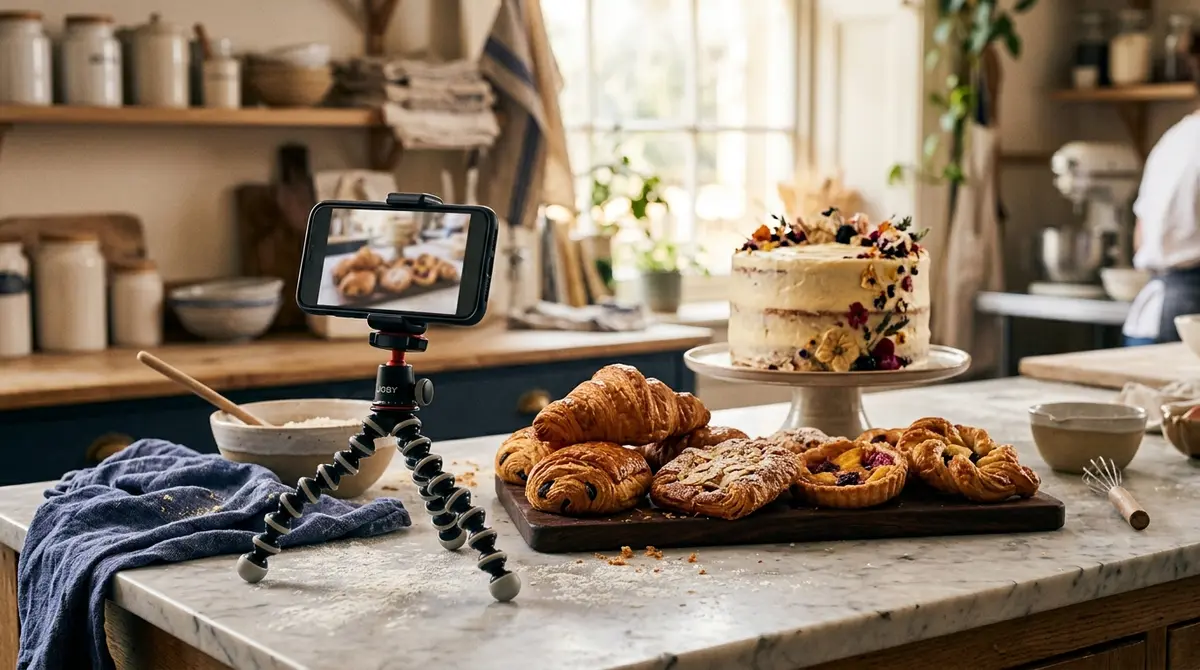
For a Malaysian bakery or dessert business, the winning Facebook and Instagram formula is appetising close-up food creative pointed at a click-to-WhatsApp conversion, so a tap on the ad opens a chat where buyers place pre-orders the way they already do. Facebook's ad reach in Malaysia was about 23.1 million people in early 2025 (DataReportal), and Meta advises running a messaging campaign for at least seven days before judging results. Keep budgets modest, target a tight delivery radius around your kitchen, and only claim 'halal' if you hold valid JAKIM certification.
You bake from a home kitchen or a small shop, orders come through WhatsApp, and you want Facebook and Instagram to bring more of them without burning cash on the wrong crowd. Bakery and dessert ads have their own playbook in Malaysia: the food is the hook, WhatsApp is the checkout, and your delivery radius decides who should ever see the ad. This guide walks through the creative, the setup, and the honest claims that keep you compliant.
Selling cake and dessert on Facebook and Instagram in Malaysia is not the same job as selling gadgets or courses. Your product is edible, visual, and usually made to order, and your buyers do not want a website checkout. They want to open WhatsApp, ask about flavours and delivery, and lock in a slot. So the whole ad system bends around three things: creative that makes the food look irresistible, a click-to-WhatsApp conversion that matches how people already order, and targeting tight enough that a small budget is never wasted on someone too far away to buy. Get those three right and the rest is refinement.
The reach is there to support you. DataReportal's Digital 2025 report put Malaysia at 34.9 million internet users, a 97.7% penetration rate, with 25.1 million social media user identities, about 70.2% of the population. Facebook's advertising reach was around 23.1 million people and Instagram's around 15.5 million in early 2025. Your customers are on these platforms every day. The task is to reach the slice of them within your delivery zone with a photo of a cake they cannot stop thinking about.
Lead with the food, not the logo
The single biggest lever in a dessert ad is the creative, and the creative is the food. What stops the scroll is a tight, close-up shot that fills the frame: a glossy glaze catching the light, a clean cross-section of a cake slice showing the layers, a swirl of frosting, a slow batter pour. People eat with their eyes first, and a beautifully lit product shot does more than any headline. Put your brand mark small in a corner if you must, but never let the logo be the hero. The dessert is the hero.
You do not need a studio. A recent phone camera, daylight from a window, and a plain surface will produce appetising images if you fill the frame with the food and keep the background simple. For video, capture the product in motion, because movement is what makes dessert content compelling. Shoot vertical so it fits Reels and Stories natively, and add captions, since most people scroll with the sound off. If you want a deeper look at short-form food video, the guide on Instagram Reels ads covers pacing and hooks that transfer directly to bakery content.
Variety keeps a feed from going stale. Rotate a few reliable shot types so the same account is not showing the identical cake angle every week: an overhead flat lay of a full spread, a hand slicing into a cake to reveal the crumb, a close pour of ganache, and a styled table set for a celebration. When you test creative, change one variable at a time, the opening frame of a Reel or the first carousel card, so you can read which image actually earned more taps rather than guessing. Save the versions that pull the most WhatsApp chats and build the next batch around them.
Click-to-WhatsApp is your checkout
Here is the mechanic that makes bakery ads work in Malaysia. Instead of sending a tap to a website, a click-to-WhatsApp ad opens a WhatsApp chat with your business. This mirrors exactly how home-food and bakery buyers already behave: they message to ask about flavours, prices, lead times and delivery before they commit. WhatsApp is the dominant messaging channel in the country, with one industry source estimating it reaches roughly 84% of Malaysian internet users, though a precise, primary-sourced penetration figure is not published, so treat that number as an estimate rather than gospel. Either way, WhatsApp is where the orders happen.
Setting it up is an official Meta flow, not a third-party trick. In Ads Manager you choose a conversion location of Messaging Apps, then WhatsApp, then the Send Message ad type. Your WhatsApp Business number must be connected to your Page first. Meta documents this under "Create Ads that Click to WhatsApp in Ads Manager," so you are on supported ground. One practical note from Meta: run a messaging campaign for at least seven days before you judge it, because delivery needs that window to stabilise and early numbers can mislead. If you are new to the format, the dedicated guide on WhatsApp ads in Malaysia walks through the connection steps and message templates in detail.
Get the WhatsApp Business app set up properly before you spend a ringgit on delivery. A tidy business profile with your name, area, hours and a short description reassures the buyer the moment the chat opens. Quick replies for your most common questions, flavours, price list, lead time and delivery zones, let you answer in seconds instead of retyping the same lines twenty times a day. If you carry a fixed range, a product catalogue inside WhatsApp lets buyers browse items and prices without you sending photos one by one. The smoother that first exchange feels, the more taps turn into confirmed orders.
Write the ad so the chat opens well. A good pre-filled first message or a clear invitation ("Message us for this week's flavours and delivery dates") gets the conversation moving and reduces dead-end taps. Speed of reply matters just as much: a buyer who messages during a scroll expects a human-sounding answer within minutes, and the businesses that convert best are the ones ready to respond while the craving is still fresh. Every chat that starts is a chance to convert, so treat the opening line as part of the creative.
Target the delivery zone, not the whole country
A home baker's budget is small, and the fastest way to waste it is showing ads to people who can never receive your product. Meta's location targeting lets you drop a pin on your kitchen or shop address and show ads only to people within a chosen radius. The smallest radius is roughly 1 mile, about 1 kilometre, and radius targeting cannot cross a national border, so a pin near a state edge still respects Malaysia's boundary. That precision is your friend.
Set the radius to match the area you can realistically deliver to, or the distance buyers will travel for self-collection. If you deliver within a couple of neighbourhoods, keep it tight. If you courier further, widen it, but keep the pin on your actual base so the centre is right. Exact maximum radius figures outside the US are inconsistent across sources, so rather than chase a specific number, size the radius to your real delivery map and check the estimated audience Ads Manager shows you. Meta's own Help Centre page on location targeting confirms the address and radius mechanic is an official capability. For the full set of options, including how the different "people in this location" choices behave, see the guide on Facebook location targeting.
Resist the urge to bolt on lots of interest targeting on top of a tight radius. For a home baker the geography is usually doing most of the work already, and stacking narrow interests on a small area can shrink the audience so far that delivery struggles and costs climb. Start with the radius plus a sensible age range and let Meta's delivery find the buyers inside it. If you sell a clearly themed product, wedding cakes or children's birthday cakes, a light interest layer can help, but add it as a test against the plain-radius version rather than assuming it wins.
The payoff is efficiency. When every impression lands on someone who could actually order and collect or receive a cake, your cost per WhatsApp conversation drops, because you are not paying to reach the other end of the country.
Use carousels as a scrollable menu
Bakery buyers like to compare before they choose, and the carousel format turns that browsing into a single ad. Put one flavour or product on each card, add the price in ringgit, and let people swipe through your range before tapping to WhatsApp. A carousel of chocolate, pandan, and fruit options, each priced, does a lot of the qualifying work up front and cuts the back-and-forth in chat once the buyer messages you.
Order the cards deliberately. Your strongest looking product goes first, because the first card is what stops the scroll and earns the swipe. Keep every image shot the same way, tightly on the food, so the set feels like a coherent menu rather than a mismatched album. Showing several price points in one placement also sets expectations early, which means fewer "how much?" messages and more "can I order the pandan for Saturday?" ones. The mechanics of the format, including card counts and image sizing, are covered in the Facebook carousel ad guide.
Two to five cards is plenty for a bakery; more than that and buyers lose patience before they reach the swipe-to-order card. Give each card a clean, consistent look and put the price where it is easy to read, so the ad works like a printed menu that happens to open a chat. If a particular flavour keeps selling out, make it card one for the next run and watch whether the whole set performs better.
Sell the pre-order, name the cut-off
Most bakery demand in Malaysia is seasonal and spikes around predictable moments: Raya, Chinese New Year, Christmas and year-end, Deepavali, birthdays, and corporate or bulk orders. These are pre-order businesses, and the ad should say so plainly. State the order-by cut-off date and the lead time in the creative itself, for example "order 4 days ahead" or a clear last-order date for a festive batch. This does two jobs at once: it makes the pre-order model obvious so nobody expects same-day cake, and it adds gentle urgency that nudges people to message now rather than later.
Timing matters. Start festive campaigns early enough that buyers can plan and slots can fill in an orderly way, then lower spend or pause once you are fully booked, because paying for orders you cannot fulfil helps nobody. Verified season-by-season order-volume data for Malaysian bakeries is not published, so plan around your own past bookings rather than an invented uplift figure.
Each occasion has its own rhythm. Raya and Chinese New Year bring gift boxes and whole-cake orders that people plan weeks ahead, so open pre-orders early and publish a hard cut-off. Christmas and year-end lean toward logs and celebration cakes with a tight last-order window. Birthdays run all year and reward a standing everyday campaign rather than a seasonal burst, while corporate and bulk enquiries need a clear minimum quantity and notice period stated up front so you are not negotiating basics in chat. Match the creative and the cut-off to whichever moment you are selling into.
A simple planning frame keeps the calendar sane:
| Occasion | Typical demand | What to put in the ad |
|---|---|---|
| Raya, CNY, Deepavali | Festive cakes and gift boxes | Order-by date, lead time, delivery zone |
| Christmas / year-end | Logs, celebration cakes | Last-order date, collection or delivery |
| Birthdays (year-round) | Custom single cakes | Lead time, flavour list via WhatsApp |
| Corporate / bulk | Volume orders | Minimum quantity, notice needed |
Halal is a regulated claim, handle it carefully
This is the part where honesty is not just good manners, it is the law. In Malaysia you may only describe food as halal, or display a halal logo, if you hold a valid Malaysian Halal Certification issued by JAKIM. Falsely or misleadingly describing goods as halal is an offence under the Trade Descriptions Act 2011, through the Trade Descriptions (Certification and Marking of Halal) Order 2011, which names JAKIM and the state Islamic religious councils as the competent certifying authorities. If your certification lapses or is suspended, the halal claim must stop immediately. The precise penalties were not confirmed from a primary legal source for this guide, so the safe reading is simple: do not make the claim unless you are certified.
If you are an uncertified home baker, you still have honest, useful language available. Describe ingredients factually, for example "no pork, no lard" or "no alcohol used." That tells a buyer what they want to know without asserting a certification you do not hold. It is truthful, it is compliant, and Malaysian buyers understand the distinction. For a fuller treatment of compliant creative in this space, see the guide on halal ad creative in Malaysia.
Trust signals you can state honestly
Beyond halal, dessert buyers are trusting you with something they will eat, often for a celebration, so the ad should earn confidence with claims you can stand behind. Things a home baker can state truthfully include made-to-order or freshly baked, a hygienic home kitchen, quality of specific ingredients, real customer reviews, proof of repeat orders, and clear lead times. Screenshots of genuine WhatsApp reviews or a note that a customer reorders every festive season are powerful precisely because they are real.
Presentation of proof matters as much as the proof itself. A short screen-recording that scrolls through genuine WhatsApp messages, a repeat customer tagging you in their festive spread, or a simple before-and-after of a custom order all land harder than a written claim because the buyer can see they are real. Keep the language specific and checkable: name the ingredient, state the exact lead time, show the actual review. Vague superlatives invite doubt, while a concrete, verifiable detail does the persuading for you.
Named Malaysian home bakeries such as Cake By Su, Autumn Bake By KX, Sweet Bakes by Trixie, Nezuko Bakery and Dulce Bakes have built followings by showing their product consistently and letting the work speak, as documented in local roundups of home bakeries on Instagram. You do not need to copy anyone's style, but the lesson is consistent: show the food, be specific, and let honest proof do the persuading. Avoid vague superlatives that a buyer cannot verify, and never overclaim on health, safety or certification.
Run the same creative across Facebook, Instagram and Reels
You do not have to pick a platform. Facebook's roughly 23.1 million and Instagram's roughly 15.5 million Malaysian reach mean the same set of photos and short videos can serve across both, plus Reels and Stories. Build the creative once, let Meta deliver across placements, and then read which placements actually produce WhatsApp conversations for your products. For many dessert sellers, short vertical video on Reels drives discovery while carousels and messaging ads on Facebook close orders, but let your own data decide rather than assuming.
Placement is not something you have to micromanage at the start. Letting Meta deliver across Facebook, Instagram, Reels and Stories gives the system room to find the cheapest conversations, and the breakdown in reporting will later tell you where your WhatsApp chats actually came from. If one placement clearly does the heavy lifting for your products, you can lean into it, but early on the broad delivery is usually the more efficient choice.
Keep video vertical, sound-off friendly, and captioned, because mobile is where dessert discovery happens and most people watch muted. A batter pour or a slice reveal reads perfectly with the sound off if the captions carry the offer. The same clip repurposed as a carousel cover or a static image extends your reach without extra shooting.
Budget in ringgit, and stay honest about the numbers
Money should stay in ringgit and stay modest, especially for a home-based seller. Here is the honest position: there are no verified Malaysia-specific bakery benchmarks for cost per WhatsApp message, cost per order, average order value or conversion rate, so any guide quoting a precise figure for your niche is guessing. Do not anchor your plan to a made-up number.
What you can do is run a disciplined test. Set a small daily budget you can comfortably lose, run for at least the seven days Meta recommends, and measure real outcomes: chats started, chats that became confirmed pre-orders, and your cost per order in ringgit. Once you can see a repeatable cost per order that still leaves margin after ingredients and your time, scale gently by raising the budget in steps rather than doubling overnight. A platform like AdPlay.ai keeps research, creative generation and launch in one place, but the discipline matters more than any tool: spend small, measure true orders, and only grow what already pays back. The pillar guide on how to run a Facebook ad covers the end-to-end setup if you are starting from zero.
Think of the first ringgit you spend as buying information, not orders. The early days teach you which creative earns taps, which flavours people ask about, and roughly what a confirmed order costs you once you strip out the tyre-kickers. Keep notes week to week so you are comparing a settled campaign against a settled campaign rather than reacting to noise. Only when a cost per order holds steady across a couple of weeks, and still leaves margin after ingredients, packaging and your own hours, should you push the budget up, and even then in small steps.
Measure orders, not applause
Finish where the money is. Reach and likes make a nice screenshot, but they do not tell you whether the ad sold cake. For a food seller the metrics that count are WhatsApp conversations started, enquiries and DMs, confirmed pre-orders, and cost per message or per order in ringgit. Because your ads point to a chat, track how many of those chats become real orders and work backwards to a cost you can accept.
Give every campaign the seven-day window Meta advises before drawing conclusions, and compare like periods, a full week against a full week, rather than reacting to one quiet afternoon. When you refresh creative, keep the winning format and change one thing at a time so you learn what moved the result. Do that consistently and your bakery ads stop being a guess and start being a reliable line from a scroll-stopping photo, to a WhatsApp chat, to a boxed cake going out for delivery.
By the numbers
Frequently asked questions
How do I set up a click-to-WhatsApp ad for my bakery?
In Meta Ads Manager, choose a conversion location of Messaging Apps, then select WhatsApp, then the Send Message ad type. Your WhatsApp Business number has to be connected to your Facebook Page first. When someone taps the ad on Facebook or Instagram, it opens a WhatsApp chat with your business instead of a website, which matches how Malaysian buyers already place pre-orders. Write the ad so the first message they see invites a clear next step, such as asking for the flavour list or the nearest delivery date. WhatsApp Business documents this as an official flow, so you do not need any third-party tool to run it.
Can I say my cakes are halal in a Facebook ad?
Only if you hold a valid Malaysian Halal Certification issued by JAKIM. In Malaysia the word halal and the halal logo are regulated, not marketing adjectives. Falsely or misleadingly describing food as halal is an offence under the Trade Descriptions Act 2011, through the Trade Descriptions (Certification and Marking of Halal) Order 2011, which names JAKIM and the state Islamic religious councils as the competent certifying authorities. If you are not certified, do not use the logo or the word. You can still describe ingredients factually, for example 'no pork, no lard' or 'no alcohol used,' which is truthful and useful to buyers without making a halal claim you cannot back.
What is the best radius to target around my kitchen?
Match the radius to the area you can realistically deliver to or that buyers will travel to for self-collection. Meta lets you drop a pin on your address and show ads only to people within a chosen radius, and the smallest setting is roughly 1 mile or about 1 kilometre. Radius targeting cannot cross a national border, so a pin near a state edge still respects the Malaysian boundary. Start tight around your delivery zone rather than blanketing the whole country, because a home baker's budget stretches much further when every impression is shown to someone who could actually order. Widen it only if you add courier delivery to further areas.
Should I advertise on Facebook or Instagram for desserts?
Run both. Facebook's advertising reach in Malaysia was about 23.1 million people in early 2025 and Instagram's was about 15.5 million, so both offer large audiences and the same creative can serve across placements. Instagram and Reels tend to be where a lot of dessert discovery happens on mobile, while Facebook still carries broad reach and works well for carousel menus and messaging ads. You do not have to choose one platform and abandon the other. Build your food photos and short videos once, let Meta deliver across Facebook, Instagram, Reels and Stories, and read the results to see which placements bring the most WhatsApp conversations for your particular products.
How much should a home baker budget for ads?
Keep it modest and in ringgit, and treat the first weeks as learning rather than scaling. There are no verified Malaysia-specific benchmarks for bakery cost per message or cost per order, so be sceptical of anyone quoting a precise number. A sensible approach is to set a small daily budget you can afford to lose, run the campaign for at least the seven days Meta recommends so delivery stabilises, and judge it on real outcomes: how many WhatsApp chats started, how many turned into confirmed pre-orders, and what that cost you per order. Increase spend only once you can see a repeatable cost per order that leaves room for your margin.
Why use a carousel ad for a bakery?
A carousel works like a scrollable menu. You put one flavour or product on each card, add the price in ringgit, and let a buyer swipe through your range inside a single ad before tapping to WhatsApp to order. This suits bakeries because people often want to compare options, for example a chocolate versus a pandan versus a fruit cake, before they commit. It also lets you show several price points in one placement, which sets expectations early and reduces back-and-forth in chat. Lead with your strongest looking product on the first card, since that is what stops the scroll, and keep every image tightly shot on the food itself.
Do I need professional photos to advertise dessert?
You need appetising photos, and a modern phone in good light can produce them. The creative that stops the scroll for bakery and dessert ads is tight, close-up food photography and short clips of the product in motion, such as a batter pour, a frosting swirl, a clean cross-section of a cake slice, or a glossy glaze catching the light. Lead with the product, not your logo. Shoot in daylight near a window, fill the frame with the food, and keep backgrounds simple so the dessert is the hero. For video, shoot vertical and add captions so it reads with the sound off, which is how most people scroll Reels and Stories on their phones.
How do I run festive pre-order campaigns without chaos?
Make the pre-order model explicit in the ad. Malaysian bakeries see demand spikes around Raya, Chinese New Year, Christmas and year-end, Deepavali, birthdays, and corporate or bulk orders, and the cleanest way to handle these is to state the order-by cut-off date and the lead time directly in the creative, for example 'order 4 days ahead' or a clear last-order date. This sets expectations before the chat starts and protects your kitchen from impossible last-minute requests. Start the campaign early enough that people can plan, point it at WhatsApp so buyers can lock in slots, and pause or lower spend once you are fully booked so you are not paying for orders you cannot fulfil.
Sources
- 1.WhatsApp Business (official) - Create ads that click to WhatsApp (2025)
- 2.Meta Business Help Centre - About location targeting in Meta Ads Manager (2025)
- 3.DataReportal - Digital 2025: Malaysia (2025)
- 4.MISHU - Halal Certification Guide for Restaurants in Malaysia (2025)
- 5.Lexology - Legal Framework for Halal Certification in Malaysia (2024)
- 6.TheSmartLocal MY - Malaysian home bakeries on Instagram (2024)
Keep exploring
Turn ad research into winning ads
See what 16,000 Malaysian brands advertise, then generate on-brand creative, all in one tool.
7-day free trial · No credit card required