
Restaurant & Cafe Facebook Ads in Malaysia
How Malaysian restaurants and cafes use Facebook and Instagram ads: local-radius targeting, click-to-WhatsApp reservations, food creative and the right way to measure covers.
Updated July 2026 · Xanny Lee, CEO
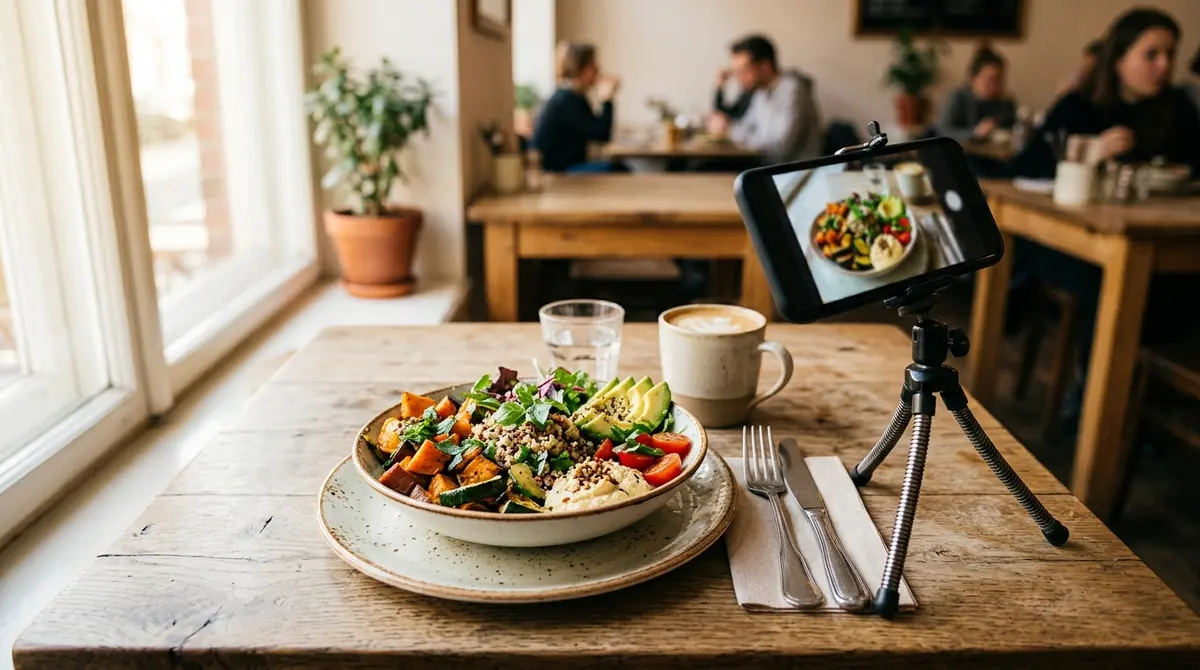
Malaysian restaurants and cafes get the most from Facebook and Instagram ads by pairing local-radius targeting with click-to-WhatsApp. Drop a pin on your outlet and set a custom radius (Meta supports 1-80 km) targeting people recently in the area, then run appetising food Reels and carousel menus with a WhatsApp button so nearby diners can book or order in one tap. Restaurants and Food already tends to beat the cross-industry average, with a US median CTR of 2.19% versus 1.57% in WordStream's 2024 data.
You run a restaurant or cafe in Malaysia, and you want the tables full on a Tuesday lunch, not just likes on a photo. Facebook and Instagram can do that, but only if you target the people who can actually walk through your door and make it easy for them to book. This guide shows the local-radius targeting, WhatsApp booking flow, food creative and measurement that fit a Malaysian F&B business.
The short answer for a Malaysian restaurant or cafe
If you run an F&B outlet in Malaysia and want Facebook and Instagram to fill tables rather than just collect likes, the winning combination is narrow and specific: target the people who can actually reach your door, make it effortless for them to book, and show them food that makes them hungry.
In practice that means three moves. First, use local-radius targeting: drop a pin on your outlet and set a custom radius, choosing whether to hit residents or people who are physically nearby right now. Second, run click-to-WhatsApp ads so an interested diner taps a button and lands in a chat with you, ready to reserve or order. Third, lean into food's natural creative advantage with appetising Reels, Stories and carousel menus. Restaurants and Food is already one of the cheaper, higher-engagement categories in the benchmark data, so your creative works with the grain rather than against it.
The reach is genuinely there. As of January 2025, Malaysia had 25.1 million social-media user identities, equal to 70.2% of the population, on top of 34.9 million internet users at 97.7% penetration, according to DataReportal. Facebook ads could reach 23.1 million people and Instagram 15.5 million. For a local restaurant the challenge is never audience size; it is aiming that audience at the few thousand people near you who might come in this week.
This is also why boosting a post rarely works for F&B. A boosted photo shows your food to whoever is cheapest to reach, with no thought for whether they can get to your table tonight. Everything that follows in this guide is about replacing that scattergun with a tight, local, conversation-first campaign that treats a booking, not a like, as the result you paid for.
Why local-radius targeting is the whole game
Most restaurant ad money is wasted on people who will never visit. A beautiful ad seen by someone 40 km away in another town does nothing for tonight's service. Local-radius targeting fixes that, and the mechanic is real and precise.
Meta's Marketing API supports a custom locations array built from a latitude and longitude with a radius attached. The radius can run from roughly 1 to 80 km (0.63 to 50 miles), with distance measured in miles by default. That is the engine behind the drop-a-pin, draw-a-circle targeting you see in Ads Manager. For a single dine-in outlet you generally want to start tight so you only pay to reach people who can realistically show up.
There is a second, equally important control. Meta lets you choose whether the radius targets residents or visitors. In targeting terms, "home" means people whose profile lists your area as their current city, while "recent" means people whose recent location, from mobile-device data, was in your area. If you leave it unset, Meta targets both. That single toggle changes who sees your ad:
| Your goal | Choose | Why it fits |
|---|---|---|
| Office-lunch crowd, walk-in foot traffic | Recently in this location | Reaches people physically near you right now |
| Weekend destination dining | Recently in this location, wider radius | Captures people travelling into the area |
| Loyalty, repeat visits, resident regulars | People who live here | Targets your genuine local base |
| Broad awareness, unsure which | Both (default) | Widest local pool, less precise |
The right radius depends on where you sit. A cafe in a dense area like Bukit Bintang or George Town can reach thousands of relevant people within a couple of kilometres, so a tight circle still delivers plenty of impressions. An outlet in a spread-out suburb or a small town may need a wider radius simply to gather enough audience for Meta to optimise against. Watch your estimated audience size as you drag the radius: if it is very small, delivery will be thin and expensive per result; if it is huge, you are probably paying to reach people who will never come in. Adjust until the pool feels local but large enough to work.
You can layer other signals on top of location, but be careful not to over-narrow. For most single outlets, a sensible radius plus the home-versus-recent choice is enough for Meta's system to find the right people. Adding heavy interest or demographic filters on top of an already-tight local audience can starve delivery. Start broad within your radius, let the campaign learn, and only tighten if the results tell you to.
One honest caveat: the exact minimum and maximum drop-pin radius that Ads Manager shows outside the US is not something we could confirm from a rendered official Meta help page. The 1 to 80 km figure comes from Meta's Marketing API documentation. Treat it as the reliable technical range and test what the interface actually offers for your specific address. Our deeper walkthrough of the settings lives in the guide to Facebook ad location targeting, and the broader mechanics sit in the pillar on how to run a Facebook ad.
Click-to-WhatsApp: the format built for Malaysian bookings
Malaysians message businesses on WhatsApp. It is the default channel for asking "do you have a table for four at 8?" or "can you cater 50 people next Saturday?" Meta has a first-class ad format that plugs straight into that habit.
Ads that click to WhatsApp run across Facebook and Instagram, including News Feed, Stories and Marketplace, and the call-to-action button opens a WhatsApp conversation with your business. You build them in Meta Ads Manager. For a restaurant that is close to ideal: instead of sending someone to a website form they may abandon, you drop them into a chat where a person can confirm a booking, answer a dietary question or take a catering brief.
The format supports lead-generation, sales and marketing use cases. One commercial detail matters for your costs: the platform distinguishes user-initiated from business-initiated conversations, and the two are charged at different rates. When a diner starts the chat by tapping your ad, that is user-initiated, so replying promptly within that window keeps your messaging costs efficient. Build a simple, fast reply flow covering opening hours, location, menu highlights and a booking confirmation so no enquiry goes cold in the middle of a busy service.
The practical work here is preparation, not spend. Before you turn the ad on, set a friendly greeting message so nobody lands in an empty chat, and write a handful of quick replies for the questions you already know are coming: today's hours, whether you take walk-ins, the halal status of the kitchen, parking, and how to confirm a reservation. Decide who on the team owns the phone during service, because a lead that waits an hour for an answer is often a lead lost. Treating the WhatsApp inbox as a live front-of-house station, not an afterthought, is what turns clicks into covers.
We should be careful about one thing: secondary sources say click-to-WhatsApp works with objectives such as Engagement, Traffic and Sales, but we could not confirm the exact list of supported objectives from a fetched official Meta help page, so do not assume specific objective names until you see them in your own account. For the full setup, see the dedicated guide to WhatsApp ads in Malaysia.
WhatsApp is not the only enquiry route. If you regularly take catering, private-event or large-reservation requests, a structured form can capture the details up front. Meta's lead forms let people submit an enquiry without leaving the app, though we have not verified the specifics of using Instant Forms for restaurant reservations, such as which fields sync to an offline booking system, against Meta documentation, so plan your own follow-up process. A chat suits quick, conversational bookings; a form suits detailed enquiries where you need the date, headcount and budget before you reply.
Food creative that stops the scroll
Food advertises itself. Unlike most categories, your product is genuinely appetising on camera, and the data reflects it. In WordStream's 2024 Facebook benchmarks, covering the window from February 2023 to April 2024, Restaurants and Food traffic campaigns posted a median CPC of US$0.51 and a median CTR of 2.19%, against an all-industry median of US$0.77 and 1.57%. That is a cheaper click and a higher click-through than the average advertiser fights for. Two important qualifiers: those are US medians, not Malaysian rates, and no verified Malaysia-specific F&B ad benchmark exists, so read them as directional proof that food performs well, not as the price you will pay in ringgit.
To make the most of that advantage, shoot for appetite. If you want to see how other Malaysian kitchens are shooting theirs, we keep a set of real Malaysian food and beverage ads from the archive. A few principles that consistently work for F&B:
- Lead with a hero shot of your signature dish, well-lit, close, and unmistakably yours.
- Use motion in Reels and Stories: the sizzle on the grill, the pour of teh tarik, the cheese-pull, the plating flourish. Movement earns the scroll-stop.
- Build a carousel that lets someone swipe through your signature dishes like a mini menu, one dish per card.
- Win the first second. Whatever happens at the start of a video decides whether the rest is seen.
- Shoot real food from your own kitchen. A local audience spots stock imagery instantly, and authenticity is your edge.
You do not need a studio to do this well. Natural light near a window at lunchtime beats most restaurant ceiling bulbs, a clean plate and a tidy background do more than any filter, and a steady phone held close to the food will out-perform a distant, cluttered wide shot. Capture a short clip of every new or seasonal dish as it leaves the pass, so you always have fresh footage to cut into Reels. And treat your customers as a creative team: photos and short videos that real diners post, used with their permission, carry a credibility that polished studio work often cannot, and they cost you nothing to produce.
Format choice follows the goal. A single strong image or short video is the simplest start, a carousel ad shows range, and a vertical Instagram Reels ad delivers maximum appetite appeal in the placement younger Malaysian diners live in. Many outlets test two or three formats at once with a small budget, then put money behind whichever produces real enquiries.
Hook angles that fit Malaysian F&B
The hook is the line or first frame that earns attention. For restaurants and cafes, a handful of angles reliably pull:
- Signature-dish close-up: "The nasi lemak everyone in Bangsar is queuing for." Name the dish and the neighbourhood.
- Limited-time offer: weekday set lunches, happy-hour pricing, a dish of the month. Scarcity and a clear window drive action.
- Immediacy: "Open now, dine in tonight." This pairs naturally with recently-in-location targeting.
- Halal and family framing where it is true and relevant to your audience.
- Delivery-radius calls: "We deliver to Mont Kiara and Sri Hartamas." Tell nearby customers you reach them.
Keep the promise specific and honest. "Best in KL" is noise; "RM18 weekday set lunch, 12 to 3pm" is a reason to come in. Do not try to guess your best hook in a meeting. Write three or four honest angles, run them against the same audience and creative, and let the messaging conversations decide which line actually earns a booking. The winner is often not the one the team expected, which is exactly why testing beats debating.
Measure covers, not clicks
The fastest way to waste an F&B ad budget is to celebrate reach and likes while the dining room stays quiet. Map your metrics to outcomes a restaurant actually cares about.
For click-to-WhatsApp campaigns, the meaningful numbers are messaging conversations started, how many of those get a reply, and how many turn into a confirmed booking or order. For reservation or catering campaigns using lead forms, count submissions and how many become seated covers. Where the signal is available, offline or store-visit data adds another layer.
The step most operators skip is reconciliation. At the end of each week, compare what the ads report against your actual covers, bookings and order tickets for the same period. Two simple habits make this reliable:
| Question to answer | How to check it |
|---|---|
| Are messages turning into bookings? | Tally WhatsApp enquiries against confirmed reservations |
| Are ad diners actually showing up? | Use a booking code or offer mentioned only in the ad |
| Which ad set fills tables? | Ask new diners how they heard about you, log it |
| Is the spend worth it? | Compare ad cost to covers times average spend per table |
Give the numbers room to mean something. A single quiet Tuesday tells you almost nothing; a fortnight of enquiries, replies and confirmed covers tells you plenty. Judge an ad set on a run of results, not on one day, and resist switching everything off the moment a slow shift appears. Clicks and reach tell you the ad performed as an ad. Covers, tickets and repeat visits tell you it performed as a business. Judge on the second set. For the wider metric definitions, see the guide to Facebook ad metrics.
Do Malaysian food brands really grow this way?
They do, though every brand mixes paid and organic differently. Fish Club, a fresh-seafood brand based in Pontian, Johor, sells and delivers seafood directly to consumers and is active on Facebook, Instagram and GrabMart. It is a useful proof point that a Malaysian F&B brand can build real demand through social channels and delivery.
Two honest framings matter. Fish Club is a direct-to-consumer seafood and delivery brand, not a dine-in cafe, so it models the delivery-radius and social-selling side of F&B rather than table service. And we have not verified whether Fish Club specifically runs paid Facebook or Instagram ads versus growing through organic content and live selling; the brand's existence and social presence are confirmed, its exact ad strategy is not. Take from it the reliable lesson: the Malaysian audience for food on social is large and active, and a focused F&B brand can reach it. With 23.1 million reachable on Facebook and 15.5 million on Instagram, the demand pool is not the constraint.
The gap between a brand that grows on social and one that does not is rarely the size of the budget. It is discipline: a clear local audience, a creative that makes people hungry, a booking route that takes one tap, and honest weekly reconciliation of what the ads reported against what actually landed in the till. A single outlet running those fundamentals well can hold its own against a much larger operator that boosts posts and hopes. Start with one strong campaign, learn from real covers rather than from likes, and build the playbook that fits the way your own customers already order and dine.
A simple starter plan
You do not need a complex account to begin. A tight, honest first campaign for a single outlet looks like this:
- Set location targeting: drop a pin on your outlet, start with a small radius, and choose "recently in this location" for foot traffic or "people who live here" for regulars. Run them as separate ad sets so you can compare.
- Pick your enquiry route: click-to-WhatsApp for bookings and orders, a lead form for catering and private events.
- Build three creatives: one hero-dish image or short Reel, one carousel menu, one offer-led ad with a specific deal and window.
- Give it enough runway. Let the campaign gather data for one to two weeks before you judge it; killing an ad on day two tells you nothing reliable.
- Reconcile weekly. Match reported messages and leads against real bookings and covers, then scale only what fills tables.
On budget, there is no verified Malaysia-specific figure to anchor to, so size it by outcome rather than by a number you read somewhere. Work out what one extra booking or delivery order is worth to you, decide how many you would need for the week to pay for itself, and set a daily budget the campaign can actually learn from rather than a token amount spread too thin. Because food tends to be a cheaper, higher-engagement category, your ringgit often reaches further here than in many other verticals, but the only honest test is your own weekly reconciliation.
Keep the moving parts few and the measurement honest. Because food is a strong creative category and Malaysia is one of the most connected markets in the region, the odds are in your favour when you aim locally and make booking effortless. Keeping research, creative and launch in one place, on a platform like AdPlay.ai, can reduce the busywork, but the discipline above is what actually fills the room.
The one-page checklist
Before you press publish on a restaurant or cafe campaign, run through this:
- Is the radius tight enough that everyone you reach could realistically visit?
- Have you chosen residents versus recent visitors deliberately, not by default?
- Does the ad open a WhatsApp chat or form so booking takes one tap?
- Is the food shot real, well-lit and unmistakably from your kitchen?
- Does the first second or first frame stop the scroll?
- Is the offer specific, with a price and a time window?
- Are you tracking messages, bookings and covers, not just clicks?
- Have you given the campaign one to two weeks before judging it?
Get those eight right and you are running the same fundamentals the strongest Malaysian F&B advertisers use: reach the people nearby, make them hungry, make booking effortless, and measure what happens in the dining room.
By the numbers
Frequently asked questions
How much should a Malaysian restaurant spend on Facebook ads?
There is no verified Malaysia-specific budget benchmark for restaurants, so treat any single number with caution. The honest way to size a budget is to work backwards from covers. Decide how many extra bookings or orders one campaign needs to be worth running, estimate your average spend per table, and give the campaign enough daily budget to gather data before you judge it. Because food tends to be a cheaper, higher-engagement vertical (a US median CPC of US$0.51 in WordStream's 2024 data), your ringgit often stretches further here than in finance or property. Start small, run for a week or two, and scale only the ad sets that produce real messages, bookings or walk-ins.
What radius should I target around my restaurant?
Meta's Marketing API supports a custom radius from 1 to 80 km around a dropped pin, so the mechanic is flexible. For a single dine-in outlet, most operators start tight, often a few kilometres, so you only pay to reach people who can realistically show up. A cafe next to offices might target an even smaller lunch radius; a destination restaurant people drive to can go wider. The exact minimum and maximum shown in the Ads Manager interface outside the US is not something we could confirm from a rendered Meta help page, so test what the tool allows for your address. Start narrow, watch your results, and widen only if delivery is too limited.
Should I target residents or people nearby?
Meta lets you choose. In targeting terms, 'home' reaches people whose profile lists your area as their current city, while 'recent' reaches people whose recent mobile-device location was in your area. If you leave it unset, Meta uses both. For capturing foot traffic, the office-lunch crowd or shoppers already in your neighbourhood, the 'recently in this location' option is usually the better fit because it hits people who are physically close right now. For a loyalty or repeat-visit push, residents make more sense. Many restaurants run both as separate ad sets and compare which one actually fills tables.
Are click-to-WhatsApp ads good for restaurants in Malaysia?
They fit Malaysian F&B well because WhatsApp is how most Malaysians already message businesses. Ads that click to WhatsApp run across Facebook and Instagram, including News Feed, Stories and Marketplace, and the call-to-action button opens a chat with your restaurant. That makes them natural for reservations, table bookings, catering enquiries and orders. One thing to know: the platform charges differently for user-initiated versus business-initiated conversations, so if you reply promptly within the free user-initiated window you keep costs down. Build a simple reply flow for hours, location, menu and booking confirmation so no enquiry goes cold during a busy service.
What kind of creative works best for food ads?
Food has a built-in advantage: it photographs and films beautifully. Lead with appetising, well-lit hero shots of your signature dishes and short Reels or Stories that capture motion, the sizzle, the pour, the cheese-pull, the plating. Carousel ads let diners swipe through a menu of signature dishes in one ad. Keep the first second of any video arresting because that is what stops the scroll. This creative advantage shows up in the data: Restaurants and Food posted a US median CTR of 2.19% versus 1.57% across all industries in WordStream's 2024 benchmarks. Shoot real food from your kitchen rather than stock; authenticity reads instantly to a local audience.
Which ad format should I start with?
It depends on the goal. If you want direct enquiries and bookings, click-to-WhatsApp is the most natural starting point for a Malaysian restaurant because it turns an ad into a conversation. If you want to show off range, a carousel of signature dishes works well. If you want reach and appetite appeal, a short Reel or Stories video shot in your kitchen is hard to beat. Many outlets run a small test of two or three formats at once, then put budget behind whichever produces the most real outcomes. Avoid judging by likes; judge by messages, bookings and covers.
How do I measure whether the ads actually bring diners in?
Map your metrics to real restaurant outcomes, not vanity numbers. For click-to-WhatsApp, track messaging conversations started and how many turn into replies and confirmed bookings. For reservation or catering campaigns using lead forms, track submissions and how many become seated covers. Where available, look at store-visit or offline signals. The most important step is reconciliation: compare what the ads report against your actual covers, bookings and order tickets for the same period. Ask new diners how they heard about you, or use a booking code from the ad. Clicks and reach tell you the ad worked as an ad; covers tell you it worked as a business.
Do Malaysian food brands really grow through social ads?
Malaysian F&B brands do build real businesses on Facebook and Instagram, though every brand's mix of paid and organic differs. Fish Club, a fresh-seafood brand based in Pontian, Johor, sells and delivers seafood directly to consumers and is active on Facebook, Instagram and GrabMart. It shows how a Malaysian food brand can reach customers through social channels and delivery. Note that Fish Club is a direct-to-consumer seafood and delivery brand, not a dine-in cafe, and we have not verified whether it specifically runs paid ads versus organic and live selling. Use it as evidence that the audience is there, and Malaysia's 25.1 million social-media users confirm the reach, then build the playbook that fits your own outlet.
Sources
Keep exploring
Turn ad research into winning ads
See what 16,000 Malaysian brands advertise, then generate on-brand creative, all in one tool.
7-day free trial · No credit card required